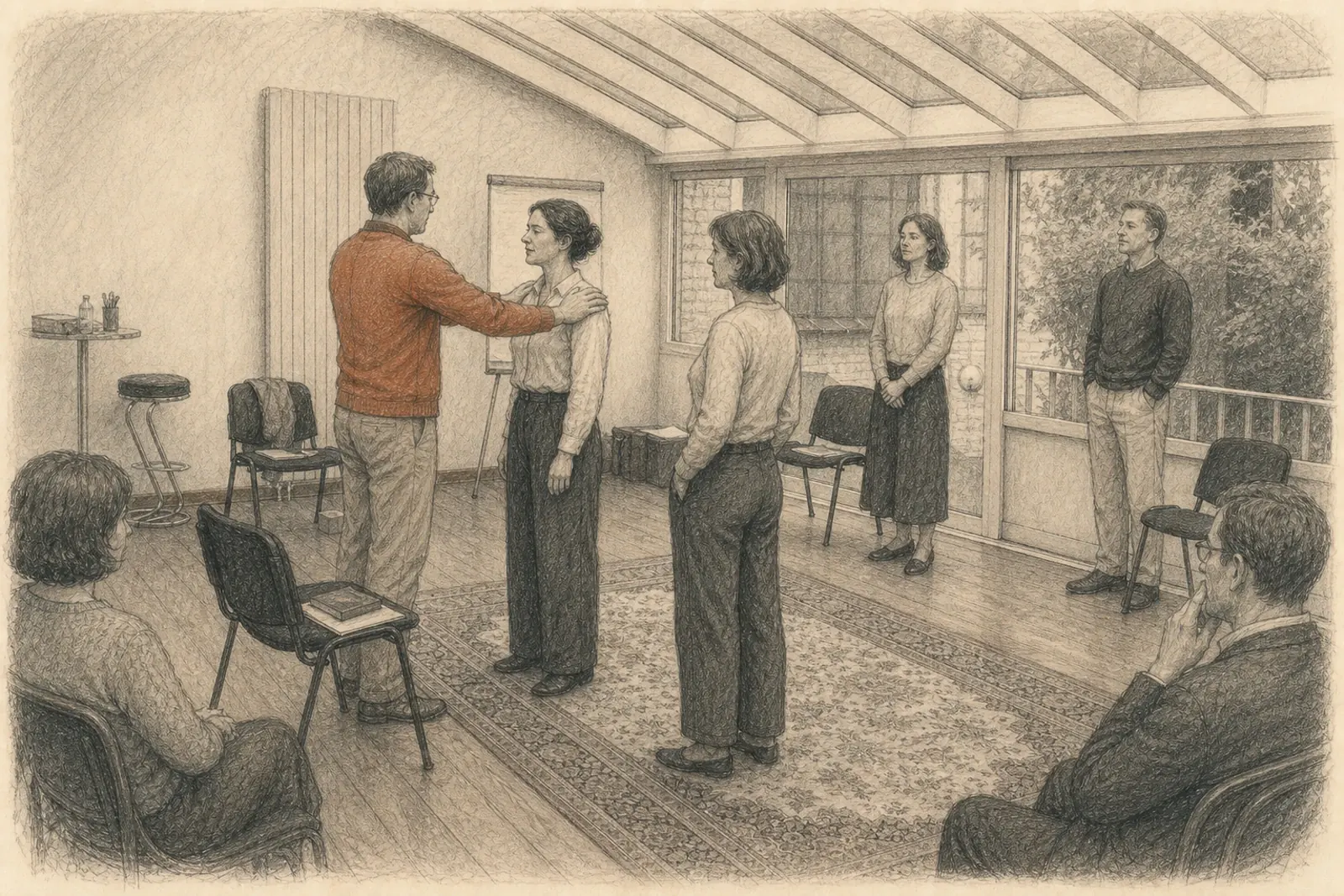
The history of family constellations
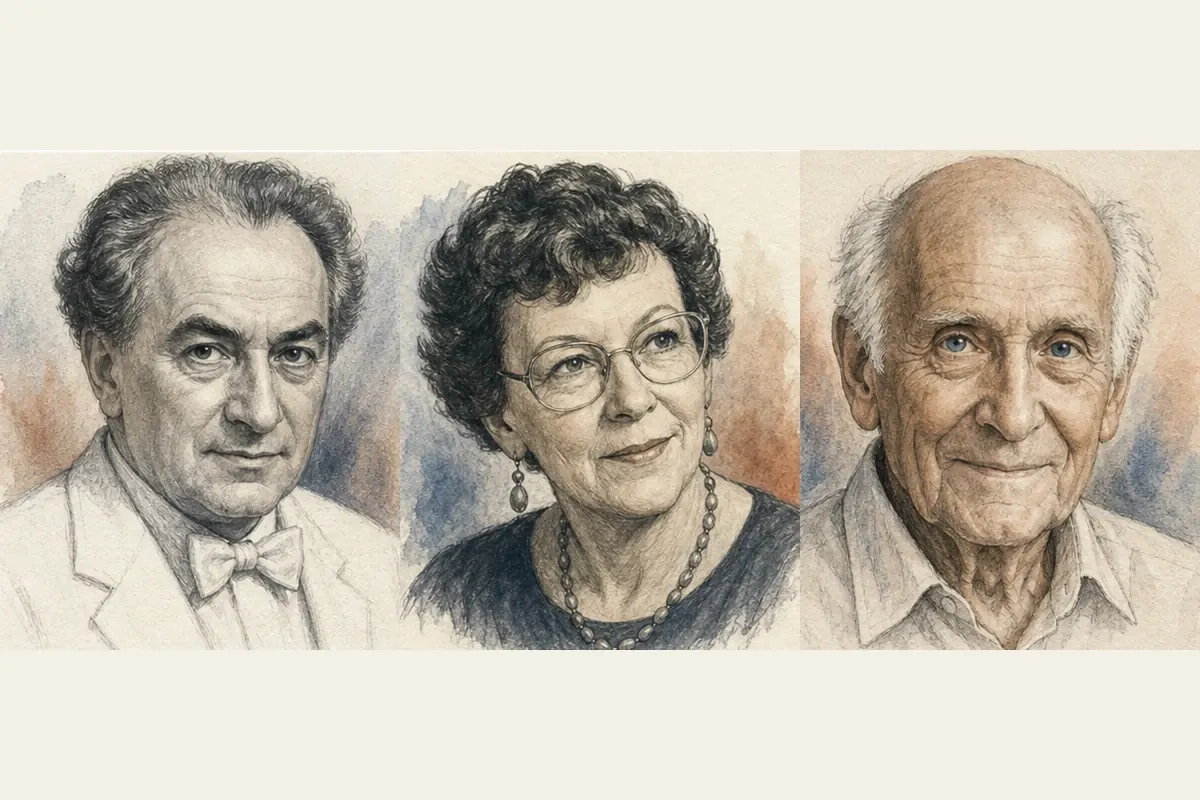
The method’s creator was a Hamburg psychiatry professor almost nobody names. The real history, with sources: Thea Schönfelder, Virginia Satir, movement therapy, and what Hellinger actually did.
Read more
Systemic family work
A family constellation places the hidden structure of your family in space so you can see it, feel it, and shift it. The facilitator guides and holds the direction, and what you discover, you feel as much as understand.

What it is
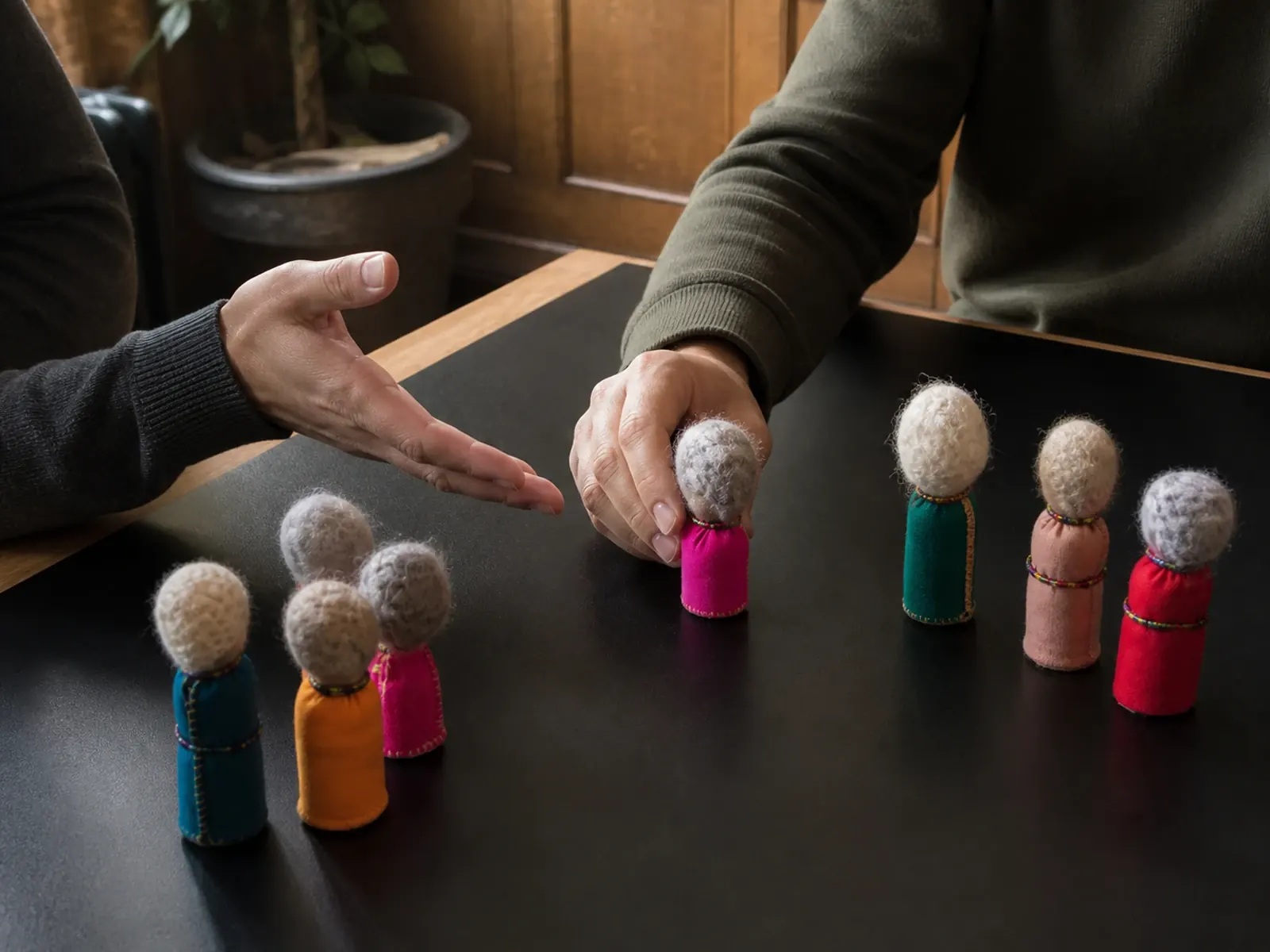
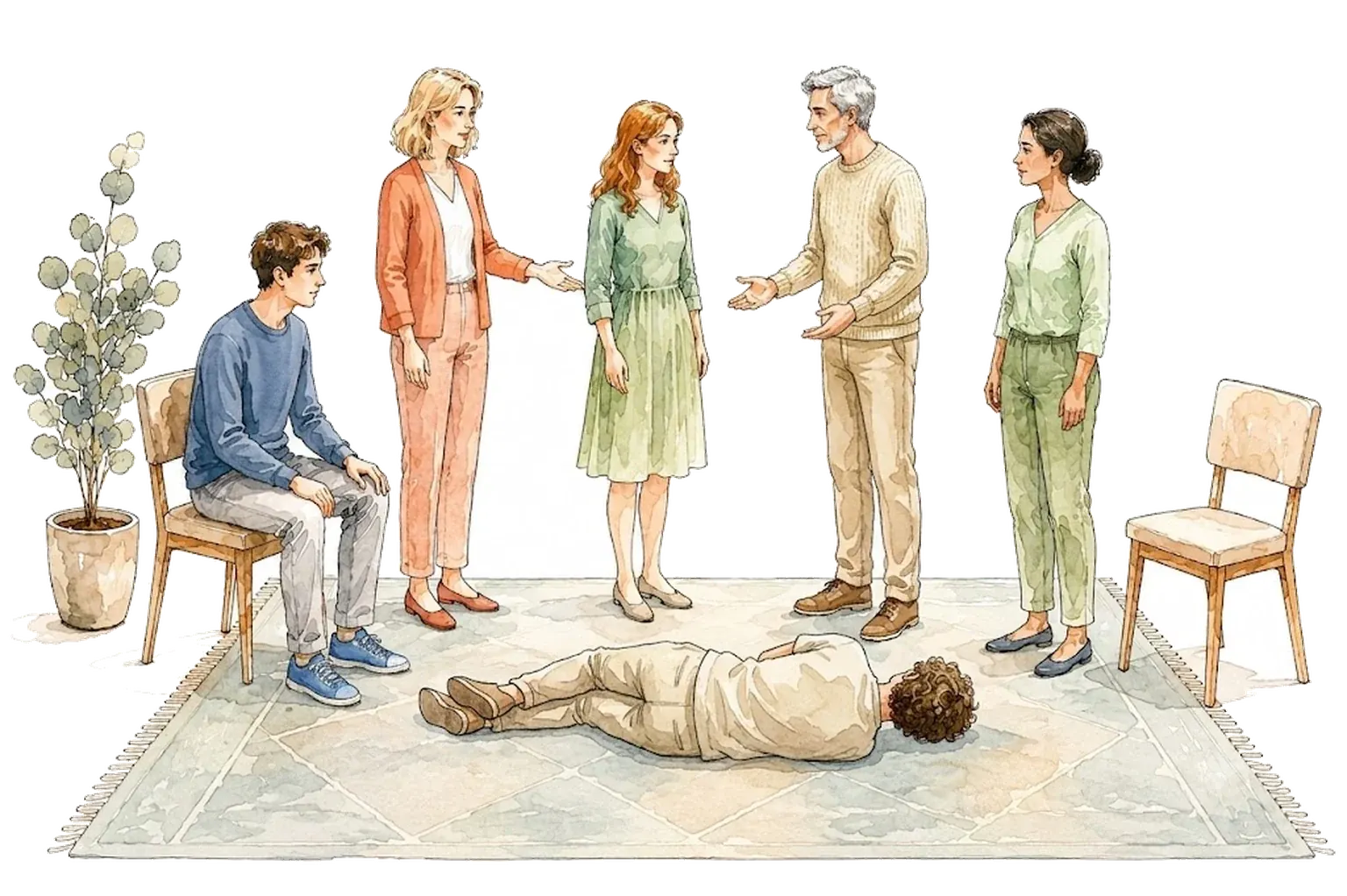
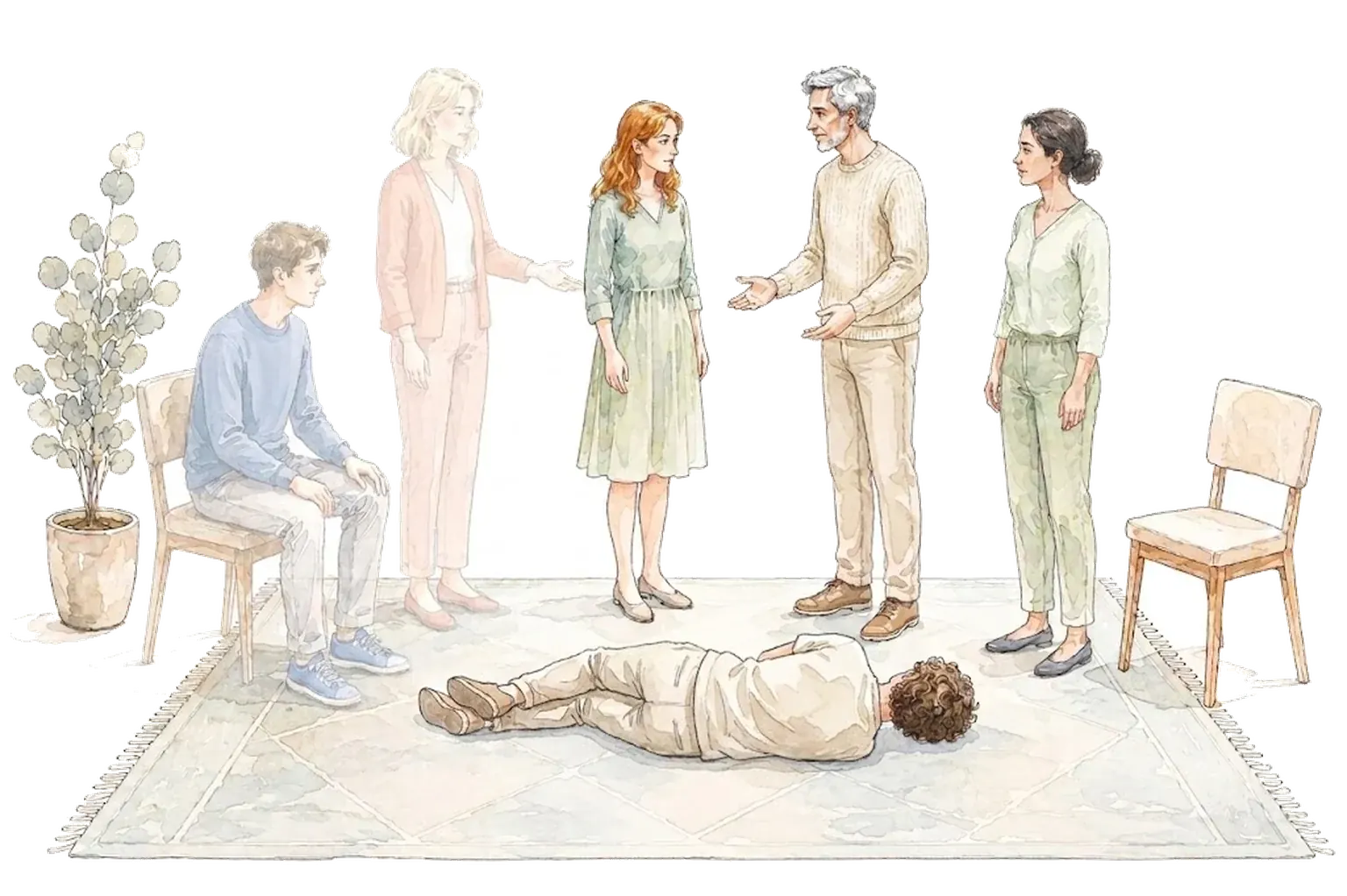
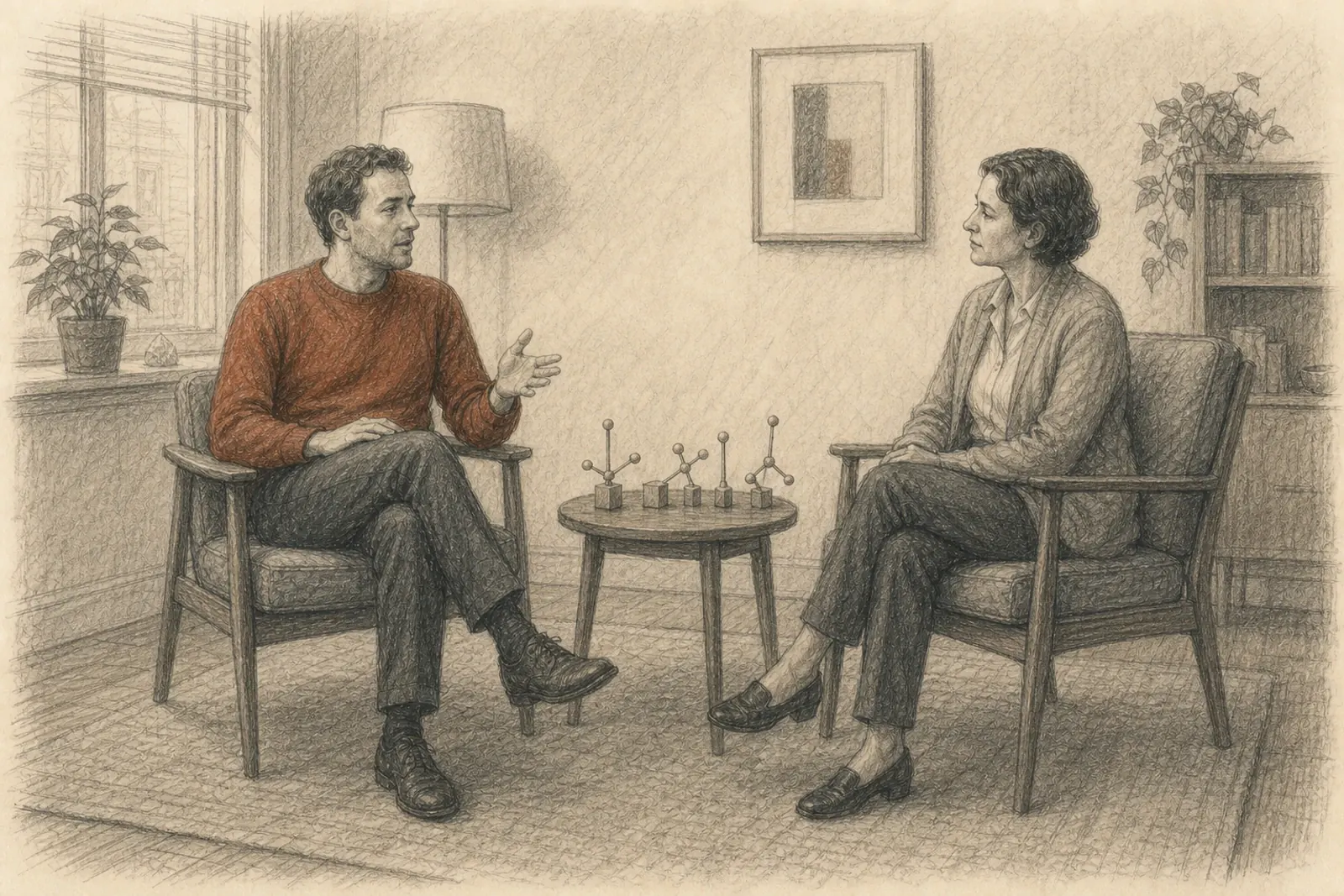
In a family constellation, you set your family out in space, so that who stands where, and who is turned away, become visible and workable. Often this is done using figures, simple objects standing in for the people in your question. We call these figures or people representatives.
Some sessions work without them, instead the picture is held entirely in the mind's eye. The method comes from family therapy and systemic therapy.
You feel the picture as well as see it. When you move a representative closer or turn another away, something shifts in your chest or your shoulders before you have words for it, and that felt change is what the session follows. In a group, the people standing in report the same kind of thing from inside their positions, and those experiences are what shapes the process.
Much of what you carry reaches back further than your own life, or deeper than your conscious mind. Parents, grandparents, a loss nobody spoke about: these stand in the picture too, and seeing where they stand often leaves you freer to choose your own place.
A family is the system most people come with, though it is not the only one the method reads. The same way of working applies to any system you belong to: a team, an organisation, a project, or the parts of your own inner world that pull in different directions. What is set out in space is a set of relationships with others, with those nearest to you, with yourself, and with your past.
What we work on
People arrive with something concrete: a relationship that keeps breaking in the same place, a symptom nobody can explain, a grief that will not settle. Any one of these is enough to start with.
The Process

Stage 1 of 4
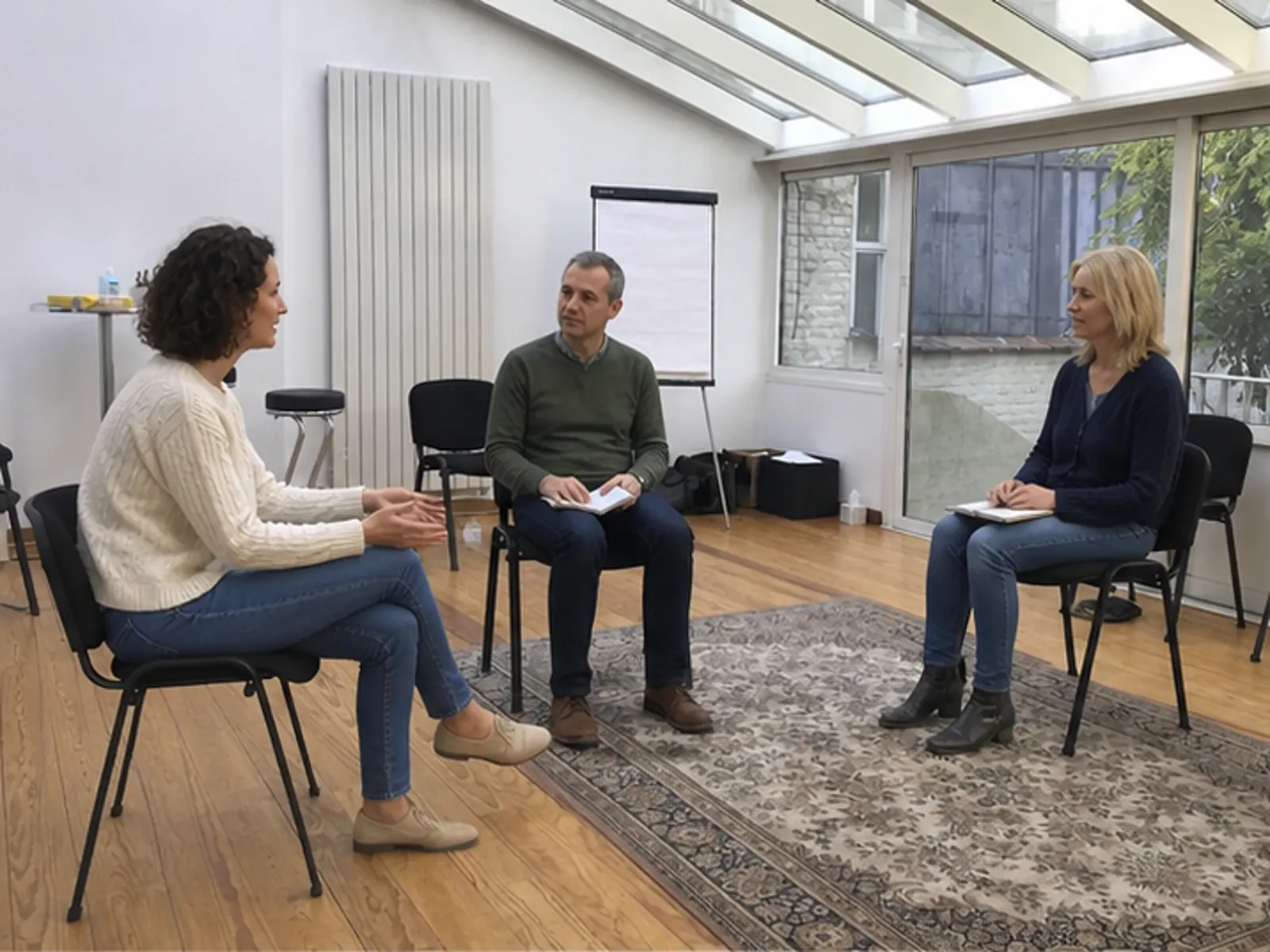
A session opens with an interview, and the interview is already part of the constellation. You talk through what you are bringing until the question underneath it comes clear, in your own words rather than in ours. That can take fifteen minutes or the whole session, and a session that is interview only is complete in itself.
All of this can be done online too. We have worked with online constellations since 2010, using both the mind’s eye and a dedicated online constellation space. There is more here on how online constellations work, what changes and what stays the same.
Who is who
The same four roles appear whether you are working privately or in a group. In a private session the people in your question are held by figures you place, rather than by people standing in a room.


A constellation brings a question into view by giving the people or elements involved a place in relation to one another. One person brings the question, a facilitator guides the process, and representatives take the places of the people or elements involved. In a private session, the basic idea is the same. Instead of people standing in the room, we may use figures on a constellation board, work in the mind’s eye, or use a shared online constellation space.
The client is the person whose question we are working with. On this page, that means you. You bring what you want to work on and what you would like to be different, in your own words. Together we work out who or what needs to be represented. As the constellation develops, you notice what happens for you and stay involved in where the work goes and how far it goes.
The facilitator guides the process from the question you bring towards the goal you have set. They help clarify where to begin, keep track of the wider system, ask what you and the representatives are noticing, and bring attention to patterns or dynamics that become visible. From there, they may suggest movements, changes of position or other experiments and see with you what happens next.
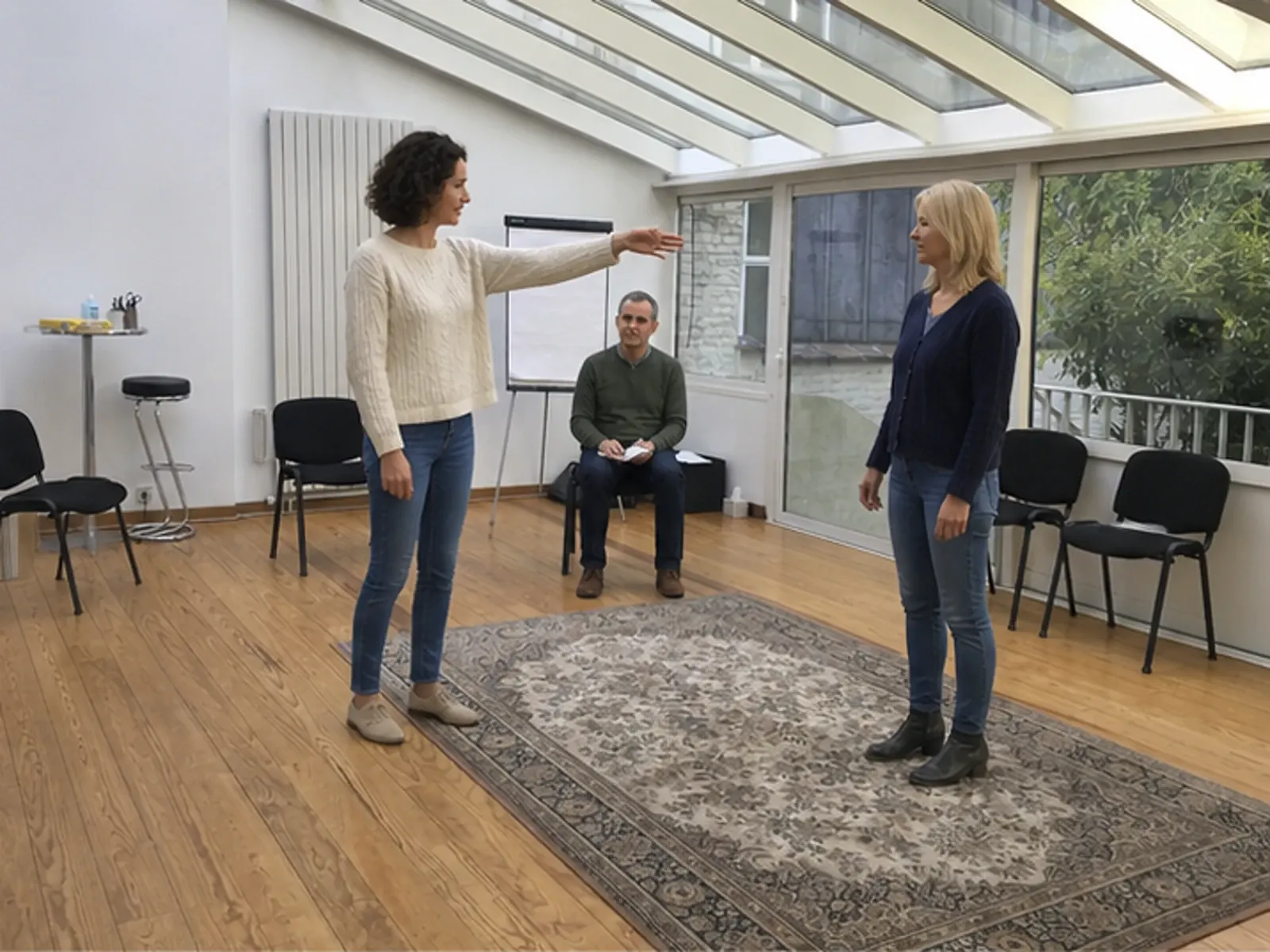
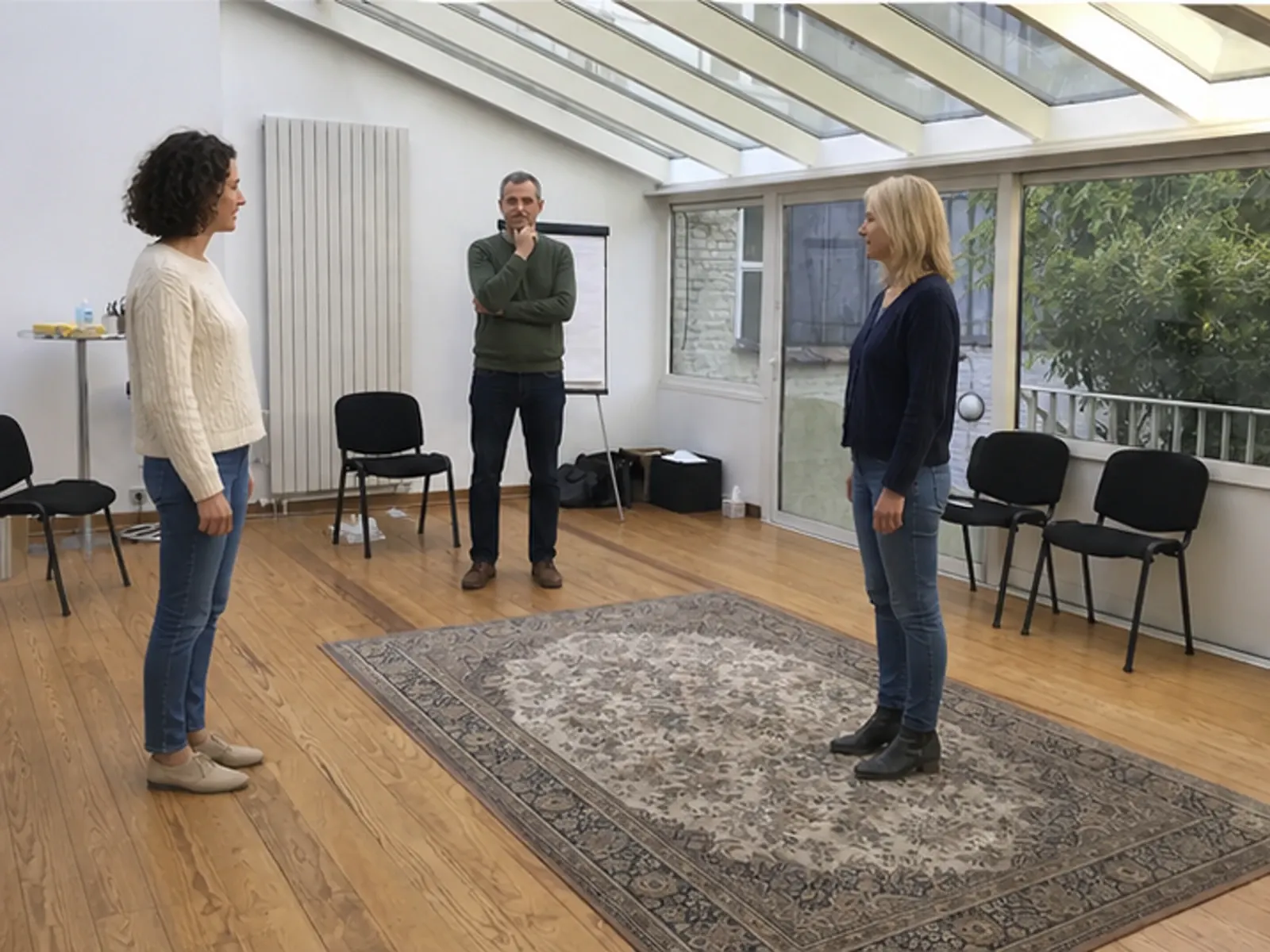
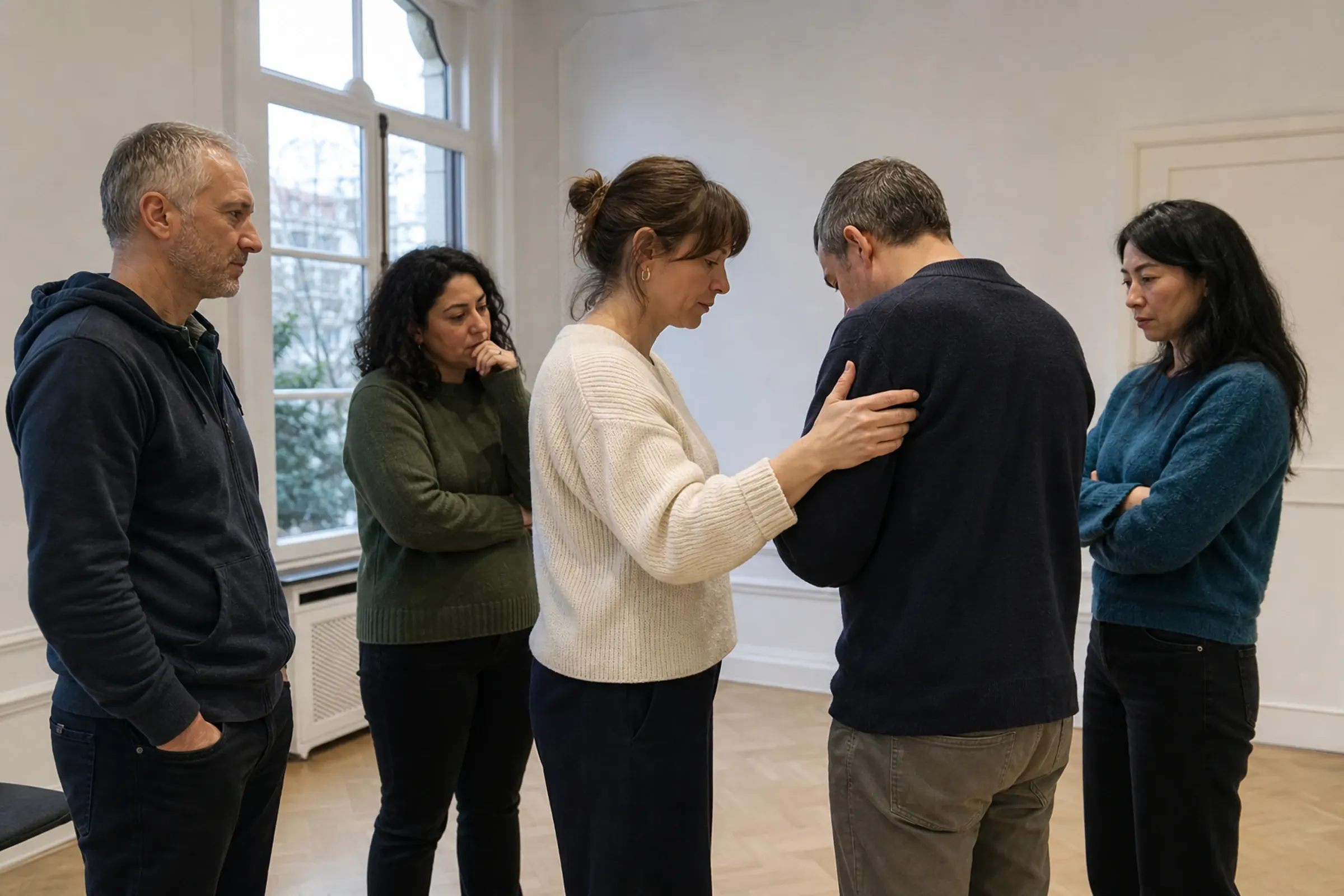
In a group constellation, representatives are the other participants who stand in for people or elements in your question. They do not need to know the person they are representing or understand their story. Their task is to pay attention to their own experience in the position: bodily sensations, emotions, impulses to move, where their attention goes, or anything else they notice. They report what they experience rather than trying to interpret it. Anyone can say no to representing or step out of a role at any time. At the end, the role is closed clearly and the representative returns to being themselves.
The two settings
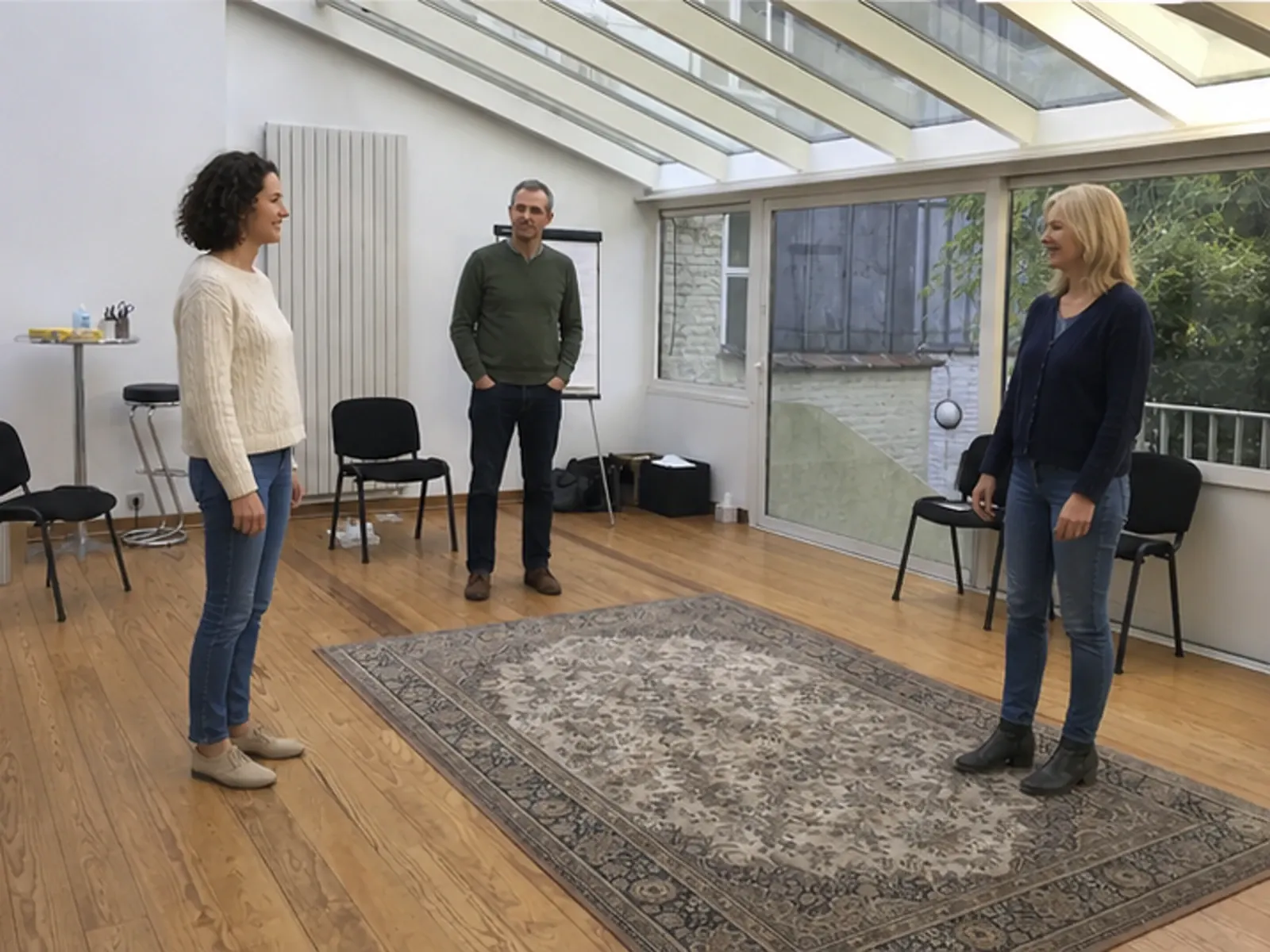
You can work one to one with a facilitator, or in a group where other people stand in for the people in your question.
You and your facilitator, and the whole session belongs to your question. You place simple figures, or hold the picture in your mind’s eye. Nobody else is in the room, and the pace is set by what you can hold.
A workshop, where the other participants stand in for the people in your question, and one person works at a time. You set out who stands where. When it is someone else’s turn you may stand in for a person in their picture, which is the same work met from the inside.
Either way, the question is yours, the pace is yours, and you set the rhythm.
How we work
Constellation work is held differently in different places, and the name alone does not tell you much. These are the commitments the sessions here run on.
Practitioners
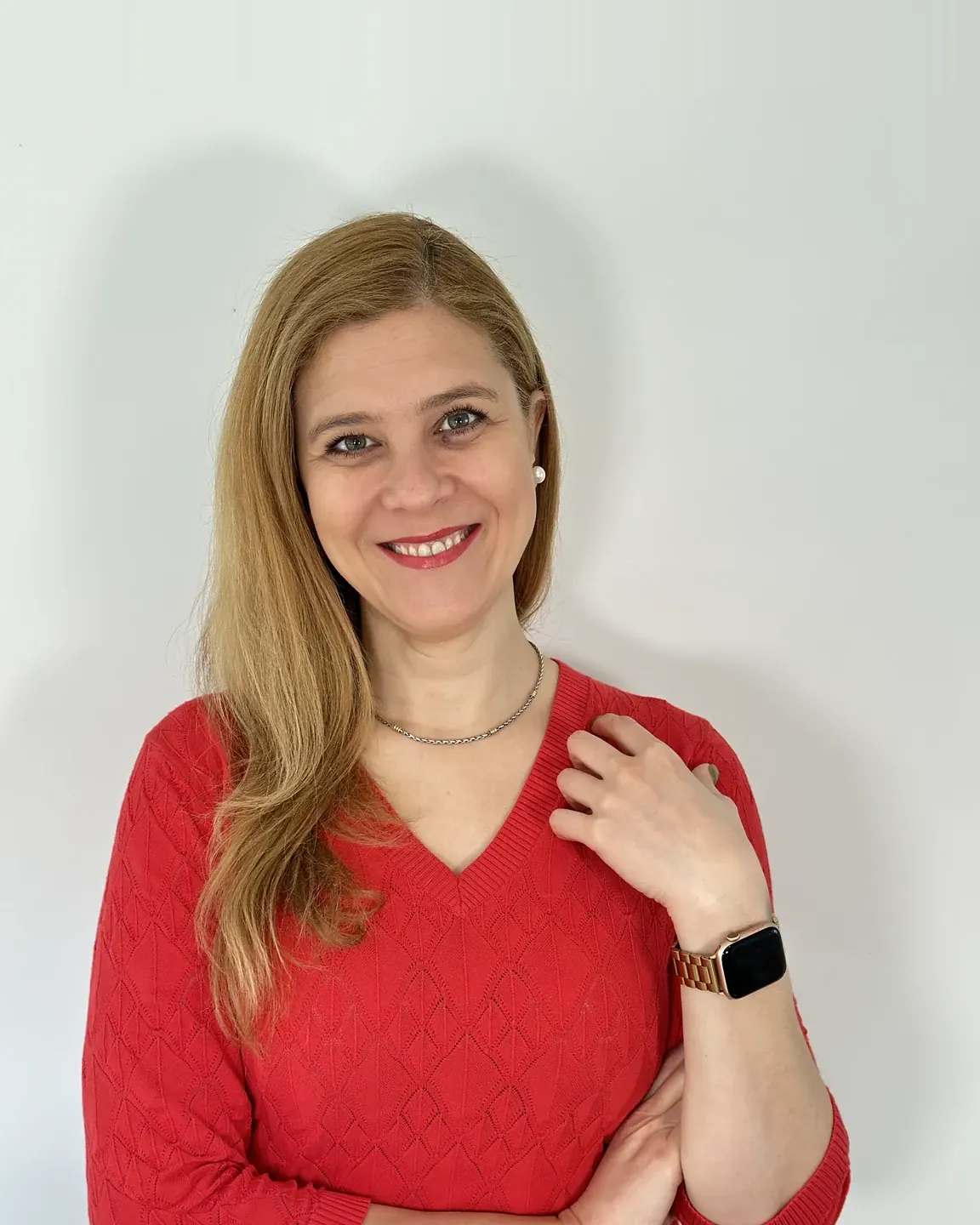
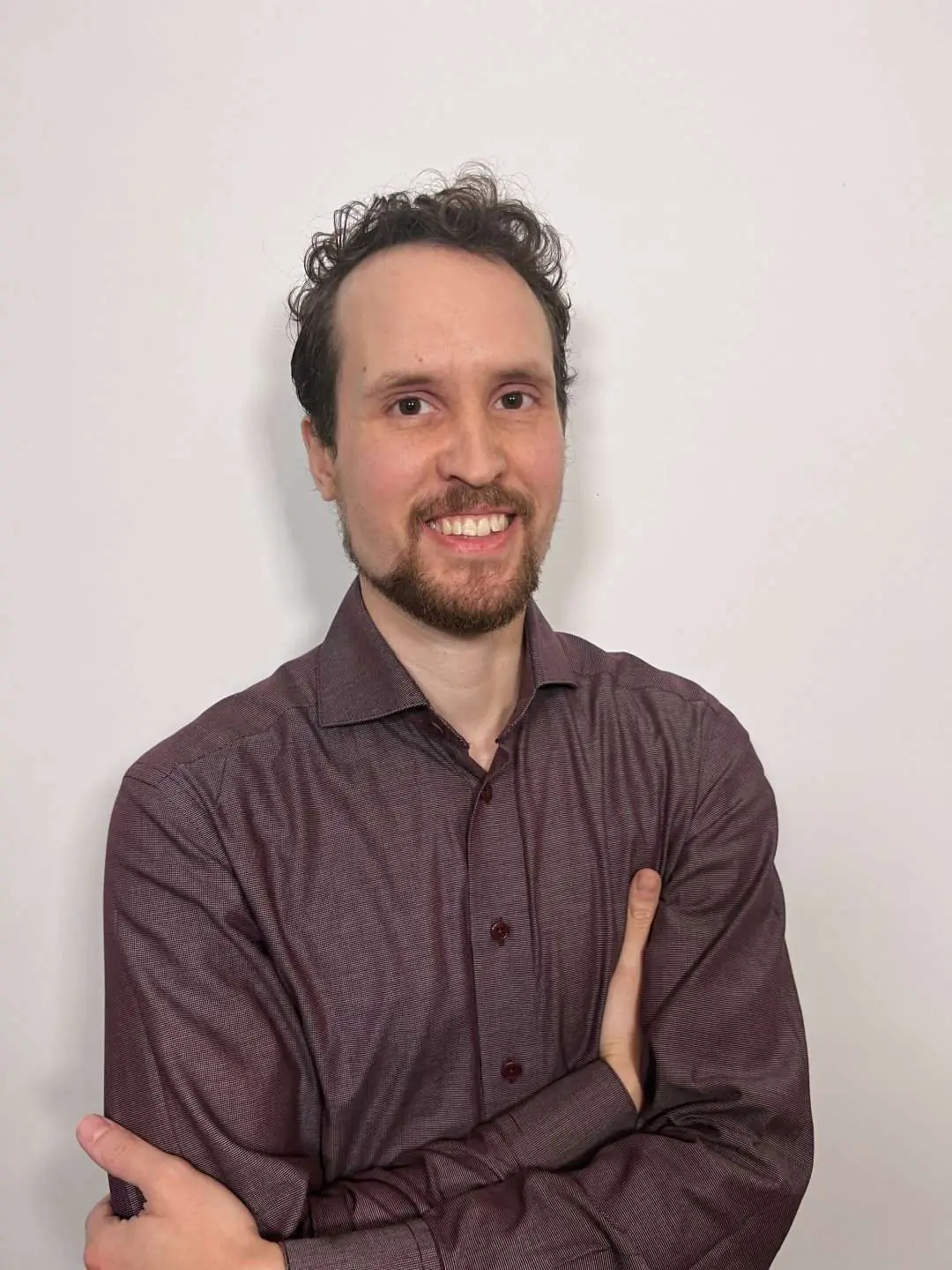
All five see clients, as well as teach together on the three-year training at EISEC. So the way a constellation is held is shared between them through cooperation. What differs is language, experience and style, and the choice is about who feels right to you.
Questions
Notes
The history, the technique, then the practical next step: a session.
The method’s creator was a Hamburg psychiatry professor almost nobody names. The real history, with sources: Thea Schönfelder, Virginia Satir, movement therapy, and what Hellinger actually did.
Read more
The interview, the spatial image, representative perception, movements and statements. A trainer takes the method apart into its real parts.
Read more
What actually happens in a one-to-one family constellations session, from the first question to the last ten minutes, told by a psychotherapist.
Read moreLooking for a different path?
Online anywhere, or in person in Brussels. If you already know which practitioner you want, book with them. If you do not, ask us and we will work it out with you.
See the practitionersScope and safety
Sessions support change in how you live, relate and decide. They sit alongside medical and psychological care, and they do not replace it.
If you are in crisis right now, or you are having thoughts of harming yourself, please turn first to your doctor, to a crisis line where you live, or to the emergency services. If you are being treated for a psychiatric condition, or you have questions about medication, that care belongs with your prescriber, and our sessions can run alongside it.
If you are unsure where to start, ask us. We will tell you honestly whether this is the right support for you now.
Your cookie preferences
Essential cookies always on
These remember your cookie choice and protect our forms from spam. The site cannot work without them.