What it is
A listening programme, not an invasive one. All you do is listen: specially filtered music through over-ear headphones, at home, in short daily sessions, held inside clinical work with your provider.
Listening therapy
A structured programme of listening, developed by Dr Stephen Porges out of his research into how the nervous system senses safety. It is designed to help the nervous system settle. Cecilia is a psychotherapist, and was the first certified provider of the Safe and Sound Protocol in Belgium, in 2020.
SSP in a nutshell
A listening programme, not an invasive one. All you do is listen: specially filtered music through over-ear headphones, at home, in short daily sessions, held inside clinical work with your provider.
Dr Stephen Porges developed the programme out of his polyvagal research, the body of work on how the nervous system reads safety and threat in the world around it.
The music has certain frequencies taken out, then slowly given back across the duration of the programme. That graded return is what the nervous system meets, which is why the sessions are heard strictly in order.
You listen daily, for around a quarter of an hour, to a schedule Cecilia sets for your case. You choose which genre of music suits you, and you keep a short journal of what you notice.
Cecilia takes you through the intake assessment, sets your listening schedule and paces it to your capacity, and keeps your listening record: when you listened, how long, where you paused. Your journal is what the weekly session works from.
Common ground
You do not need a diagnosis for this, and you do not need to recognise yourself in a list. These are the states people most often arrive with. If you want to see whether this fits where you are, there is a self check further down.
A body kept ready for something. Muscles held, breath short, waiting for the next thing.
A hard stretch or a sudden loss has passed, and the body is still on alert.
Sound, texture, light and small social shifts land harder than they seem to for other people.
Being with people takes more out of you than it should, even when you want the company.
It is hard to stay with one thing. Attention drifts, fragments or disappears just when you need it.
Tiredness that sleep does not touch, and a system that will not wind down at the end of a day.
What it is
Listening therapy here means one specific programme: the Safe and Sound Protocol, or SSP, developed by Dr Stephen Porges out of his polyvagal research. It is a clinical listening protocol with a fixed structure, specially filtered music heard in a set order across the duration of the programme, at a pace set for your case and adjusted as you go. The aim throughout is to move the nervous system towards feeling safety. The music is the same for everyone. What is shaped around you is how much you listen, how fast, and what is done with whatever it brings up.
Your body sets the pace, and the direction is always the same: towards safety.
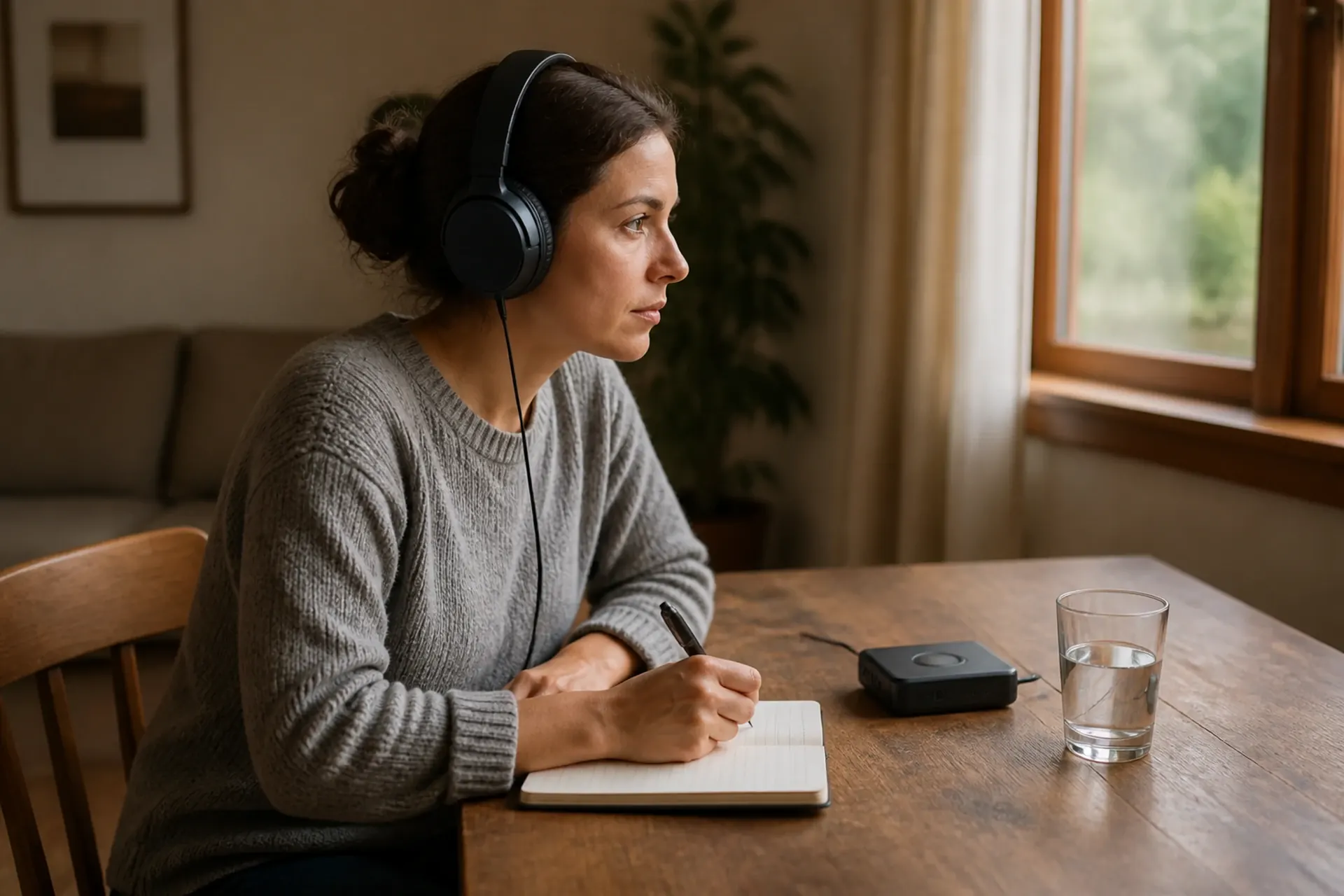
At home, through headphones
Short daily listening
Two rounds, with a pause between
For adults and for children
A written exchange first
Clinical guidance throughout
Entirely online
Paced to your capacity
How it works
Most of what the nervous system does happens below awareness. It settles the question of safety or danger before thinking gets there, and sound is one of the fastest routes to it. Listening therapy uses music filtered around the range the human voice lives in, played quietly enough that the small muscles of the middle ear have to work.
The filtering is precise, and it moves. Frequencies are taken out at the start and returned by degrees across the duration of the programme, so the signal changes shape as it goes. That is why the sessions are heard in order and cannot be doubled up, and why the volume is set low, low enough to still hear the room around you.
Listening therapy sits alongside talking work, and many people do both. Others come to it first and find their system settles enough for the rest to become possible.
How it works in practice
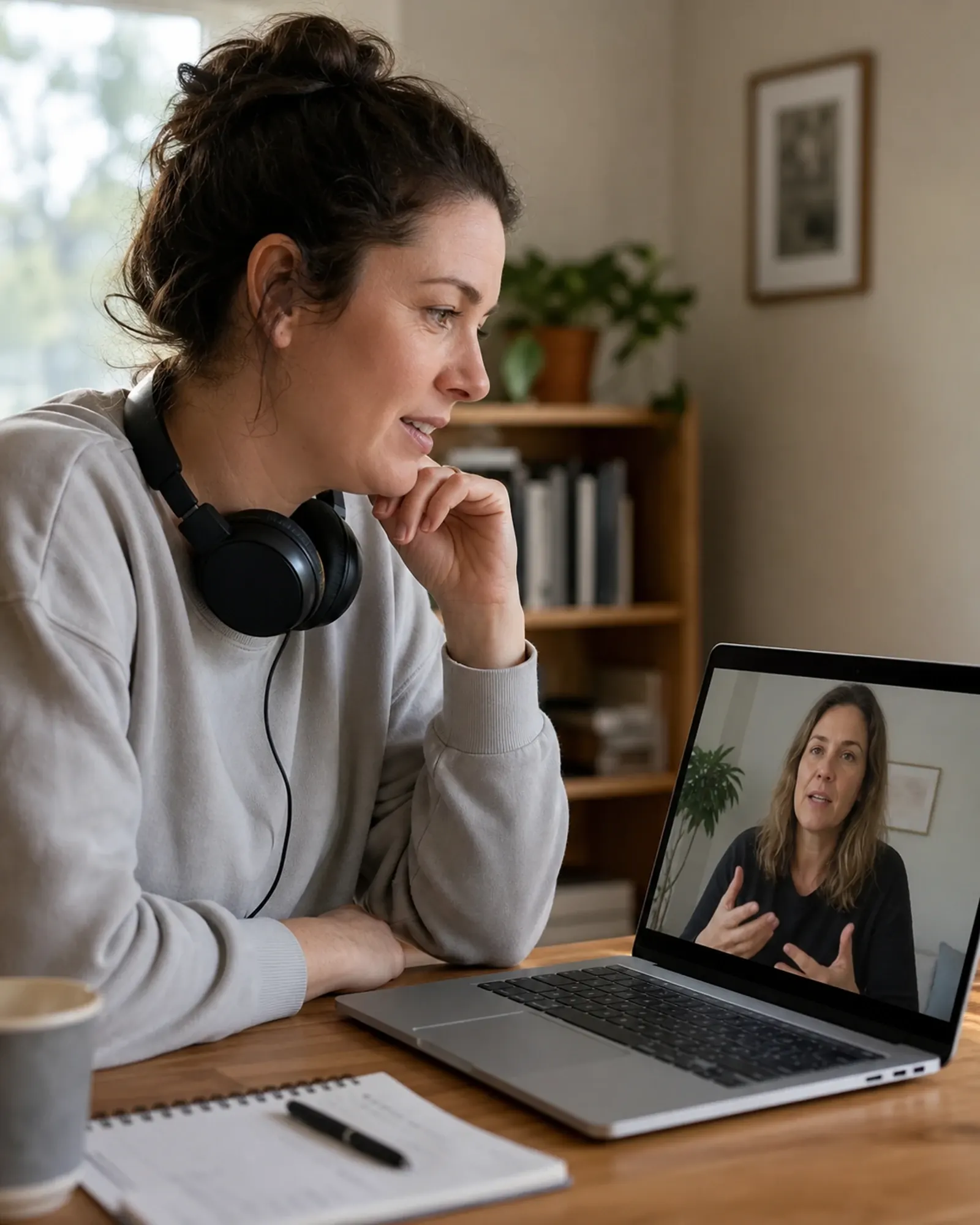
For you
Your listening schedule is set in the first session, and it is short. Most often, less than 30 minutes per day; you are asked to set it down to what has been prescribed for you. You listen at home on a phone or tablet, choose the genre of music that suits you, and keep a short note of what you notice. Once a week you and Cecilia go through that week together.
Why a nervous system stays on edge when nothing is wrong
For parents
There is no lower age limit, and there is music made for younger nervous systems. You meet Cecilia first, to work out whether it suits your child. The listening happens at home, in comfortable over-ear headphones. You keep a note of what shifts, mood, sleep, how a day goes, and bring it to the weekly session. You hold the picture of your child; Cecilia holds the clinical frame.
What a parent does while a child listensFrom first session to close
The shape of it
A round of listening, a settling pause, and a second round of listening, with a weekly session throughout. Cecilia sets the pace to your case.
Step 1
We start with an intake, and it is where your case is worked out. Cecilia goes through your situation, settles which plan fits, and sets the schedule you will follow.
Step 2
You listen daily at home, to your own prescribed schedule, and Cecilia lays out the listening schedule. This first round takes you through the protocol from start to finish for the first time.
Step 3
Every week you go through the week of listening with Cecilia: what you noticed, what moved, whether the pace is right. She can see when you listened and when you paused, so the conversation works from the record as well as from your journal.
Step 4
The main programme stops and a consolidation playlist takes over, pieces you choose from a set of options, listened to while your system processes the first round.
Step 5
The schedule, maintained or adapted according to your needs. People often move through it differently the second time. At the end you have completed a full plan, and further rounds can follow if your case asks for them.
Three levels of support
The listening is identical in all three. What changes is how much support sits around it. Each plan contains the one below it and adds to it, so the choice is a question of how closely you want to be accompanied.
The listening, with a conversation at each end and a steady weekly session running through it. You listen in your own time, to the schedule Cecilia sets for your case. Built for clients already working with a therapist of their own.
The base plan
Everything in Comfort, with the weekly session becoming therapy: work with Cecilia on what the listening is stirring and what your system is asking for. The listening itself is unchanged.
Everything in the Comfort plan
Everything in comfort, and more support around it
Everything in Therapy, and Cecilia is present for the listening itself, by video or phone, from the start of a session to the end. You listen together, with her there for whatever comes up.
Everything in the Therapy plan
Everything in therapy, and more support around it
Every plan is priced upon enquiry, based on your case.
Self check
This self check is purely informative. Nothing you mark is saved, and nothing is sent unless you choose to at the end. Mark what sounds true for you.
Step 1 of 7 What you are living with
Step 2 of 7 If any of it has a name
Step 3 of 7 Space to listen
Step 4 of 7 Is now the time?
Step 5 of 7 If this is for a child
Step 7 of 7 Overview
Nothing here rules you in or out. This is what you marked, and what it means for a plan.
Nothing in the way, and the timing looks right. Write whenever you are ready.

Who delivers it
Cecilia was the first certified Safe and Sound Protocol provider in Belgium, certified through Unyte in 2020. She has been practising since 2010, completed a degree in psychology at UNED in Spain, and holds a Diploma in Coaching from the University of Cambridge. She trained in polyvagal theory with Deb Dana and Stephen Porges, and works with adults and with children.
The listening is never handed over on its own. Cecilia sets the schedule against what she knows of your situation, adjusts it as the weeks go, and holds the therapy around it herself. The filtered music does precise work at the level of the nervous system; the weekly session does the relational work; both happen with the same person over the same months.
How this begins
You write, in your own words, about what has brought you here. Cecilia reads it herself and answers you in writing. From that exchange you both know whether listening therapy fits where you are.
Why you are writing
1 / 3
Fields marked * are the ones we need.
If listening therapy is not the right next step, there are other ways.
Notes
Two short notes on when listening helps, for a child and for an adult who cannot settle.

A child listens at home, in headphones, a quarter of an hour a day. A psychotherapist explains the parent’s role, which is larger than it looks.
Read more
Tired but wired, jumpy without reason, unable to switch off. A psychotherapist explains what a nervous system that won’t settle is actually doing.
Read moreMark what sounds true for you, mark what you would like Cecilia to answer, and send it as it stands. Nothing you mark is saved, and nothing is sent unless you choose to.
Take the self checkScope and safety
Sessions support change in how you live, relate and decide. They sit alongside medical and psychological care, and they do not replace it.
If you are in crisis right now, or you are having thoughts of harming yourself, please turn first to your doctor, to a crisis line where you live, or to the emergency services. If you are being treated for a psychiatric condition, or you have questions about medication, that care belongs with your prescriber, and our sessions can run alongside it.
If you are unsure where to start, ask us. We will tell you honestly whether this is the right support for you now.
Your cookie preferences
Essential cookies always on
These remember your cookie choice and protect our forms from spam. The site cannot work without them.