
Sessions
about 4 minutes
What to expect in a session
What actually happens in a one-to-one family constellations session, from the first question to the last ten minutes, told by a psychotherapist.
Read morePrivate sessions
Every person arrives with a different story, and not every situation calls for the same approach. There are three ways of working here: therapy, family constellations and listening therapy. What they share is a systemic view, looking at you in the context of the relationships and the history around you. Together we find the one that best fits where you are now.
Private sessions
Different questions need different work. The sessions and the practitioners are below, and if you're unsure where to begin, ask us.
Therapy for individuals, couples, families and children. For anxiety, overwhelm and burnout, and for the patterns that have been with you much longer.
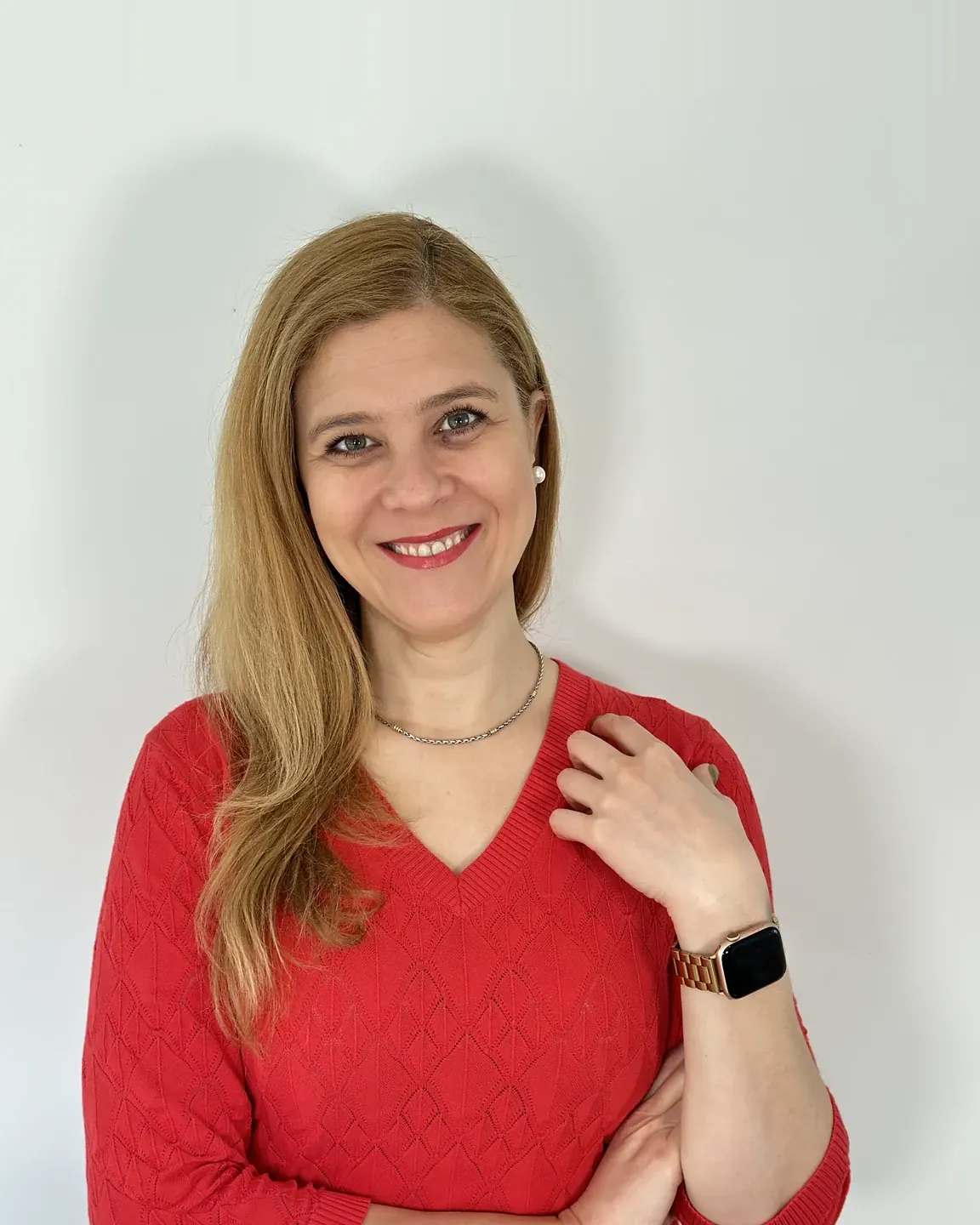 With Cecilia Altieri
 The Safe and Sound Protocol: specially treated music, listened to at home over short sessions, for a nervous system that needs a shift.
 With Cecilia and Anca
 Explore a question by making your situation visible, and take it from there.

 With 5 practitioners
 What brings people here
Anxiety that seems to be there from the moment you wake up. Feeling overwhelmed no matter how much you get done. Burnout that does not seem to improve with rest. A relationship with a parent or sibling that has become difficult or distant. Finding yourself having the same arguments in one relationship after another. A loss that still affects you long after you thought you had moved through it. A child who is often angry, anxious, or struggling to focus. A decision about work, family, or your future that you keep thinking about without getting any closer to an answer.
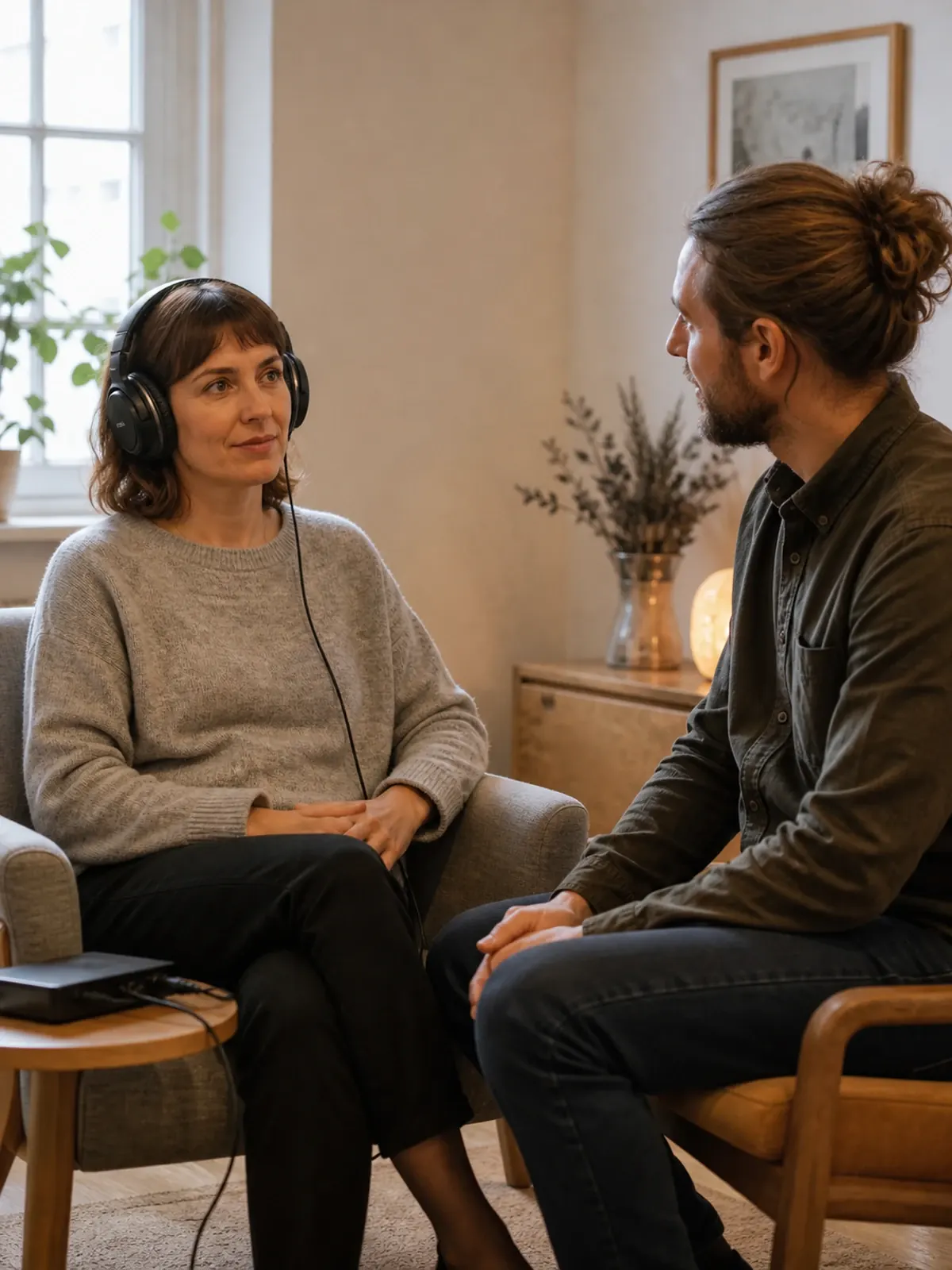
You listen to specially treated music through headphones, at home, in short sessions across several weeks. Cecilia sets the pace and follows up the whole way through. It suits people for whom the sticking point is emotional regulation: the body stays on alert whatever the mind has worked out. It begins with a conversation to understand whether it is the right fit for you. Cecilia is a certified provider of the Safe and Sound Protocol since 2020, for adults and for children, and it is meant to run alongside therapy rather than on its own.
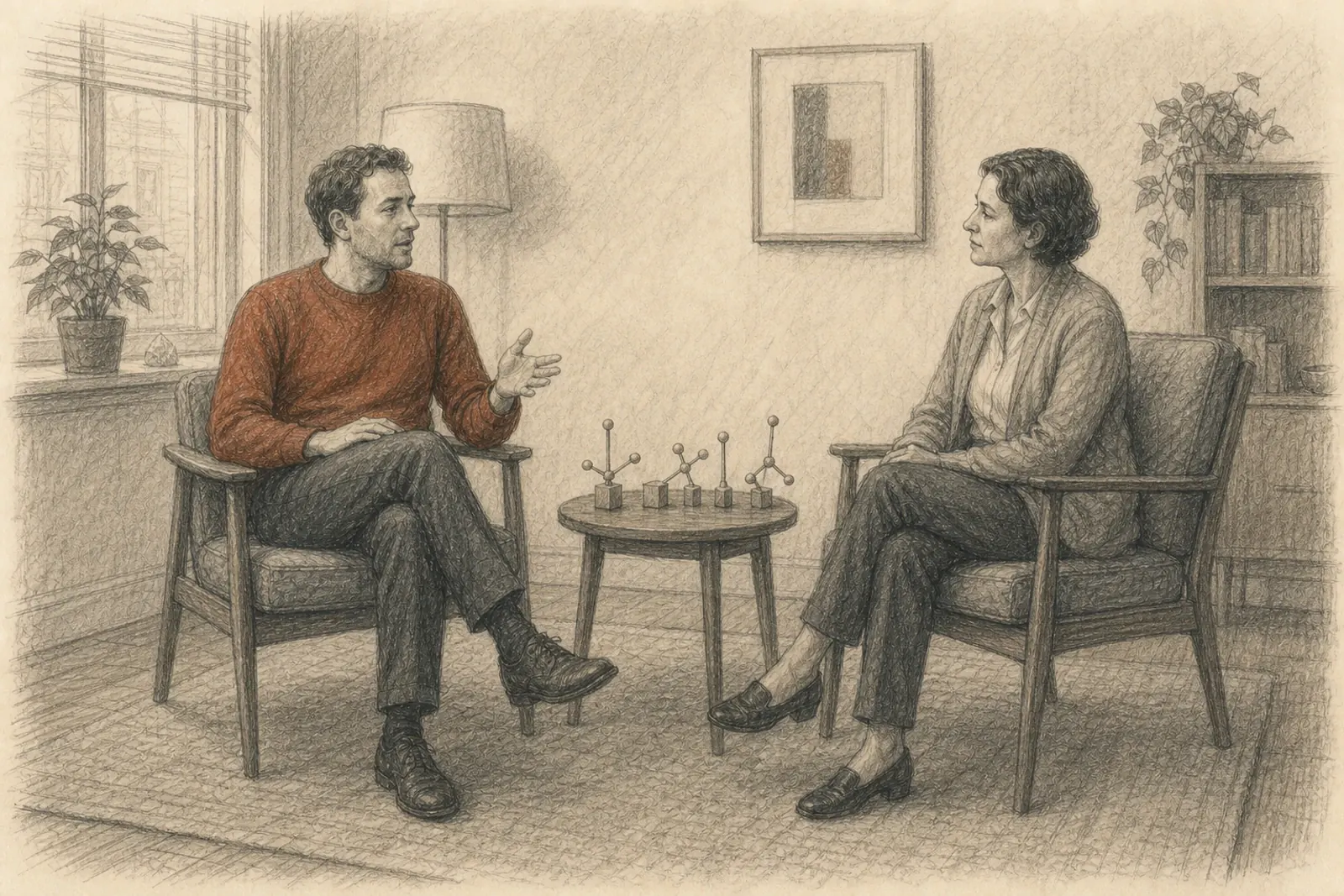
How listening therapy works →You bring what is heavy at the moment, and we work with it directly: what happened, what it set in motion, and what it still asks of you now. Cecilia uses different approaches, based on your needs. Your family and your history stay in the room, because they are usually part of what you are describing. Cecilia is a psychotherapist as well as a facilitator, and this is her clinical work.
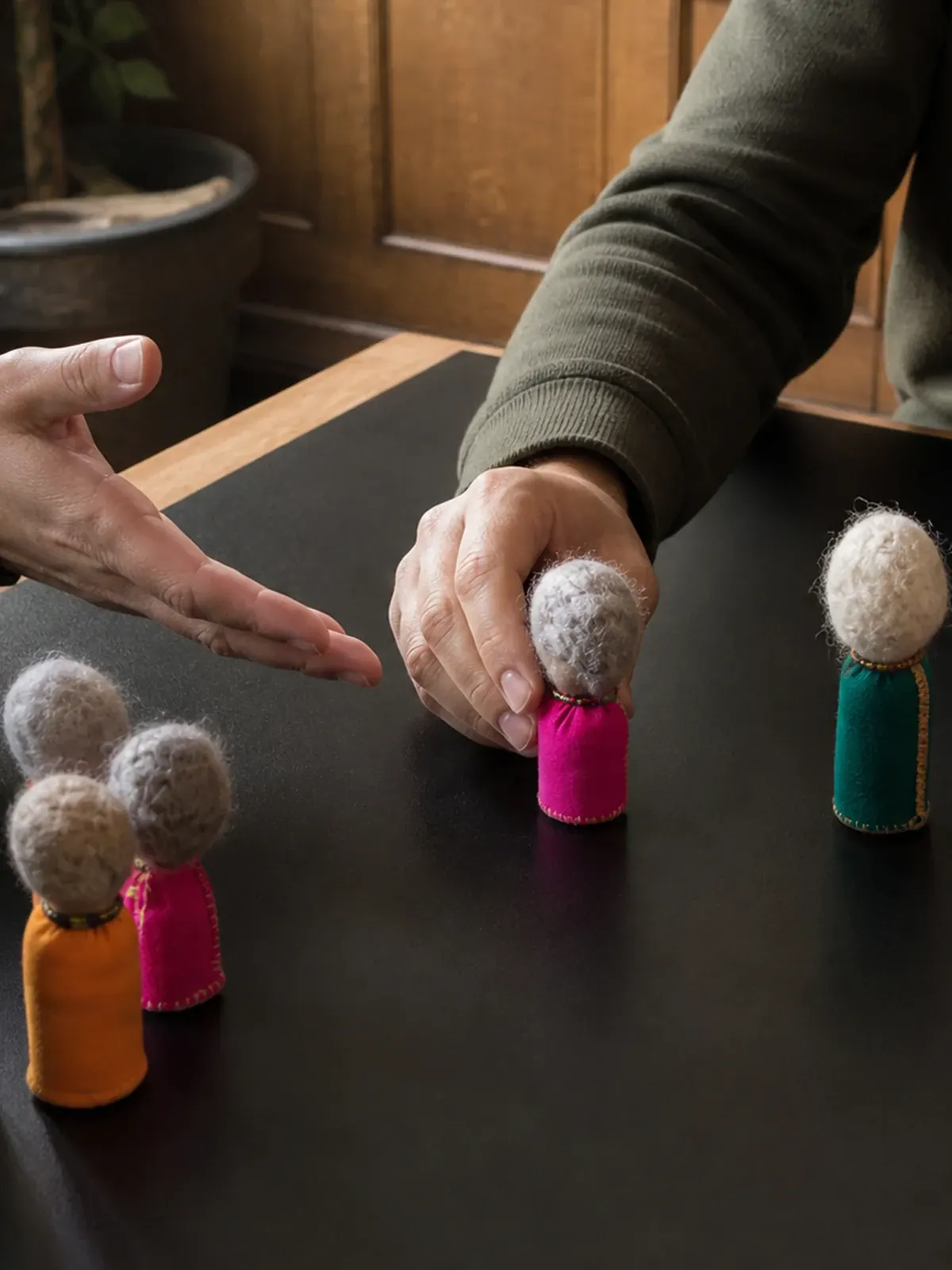
How therapy works →A family constellation makes the shape of a family visible: who stands where, who is turned away, what is being carried and by whom. Once it is in front of you, it can be worked with. You set the situation out where you can see it, with simple figures in a dedicated online constellation space, or entirely in your mind’s eye. You place the people who matter, and where you put them tells you something before anyone has said a word about them. From there it moves, at your rhythm, and towards your goals.
How a constellation works →Before you come
Two short reads that walk you through the practical side. Nothing is required of you before a first session.
Questions people actually have
Notes
Three short notes for before you book: what to expect, how to prepare, and coming as a couple.
What actually happens in a one-to-one family constellations session, from the first question to the last ten minutes, told by a psychotherapist.
Read more
Three sentences are enough preparation for a family constellations session. A psychotherapist explains which three, and what to leave out.
Read more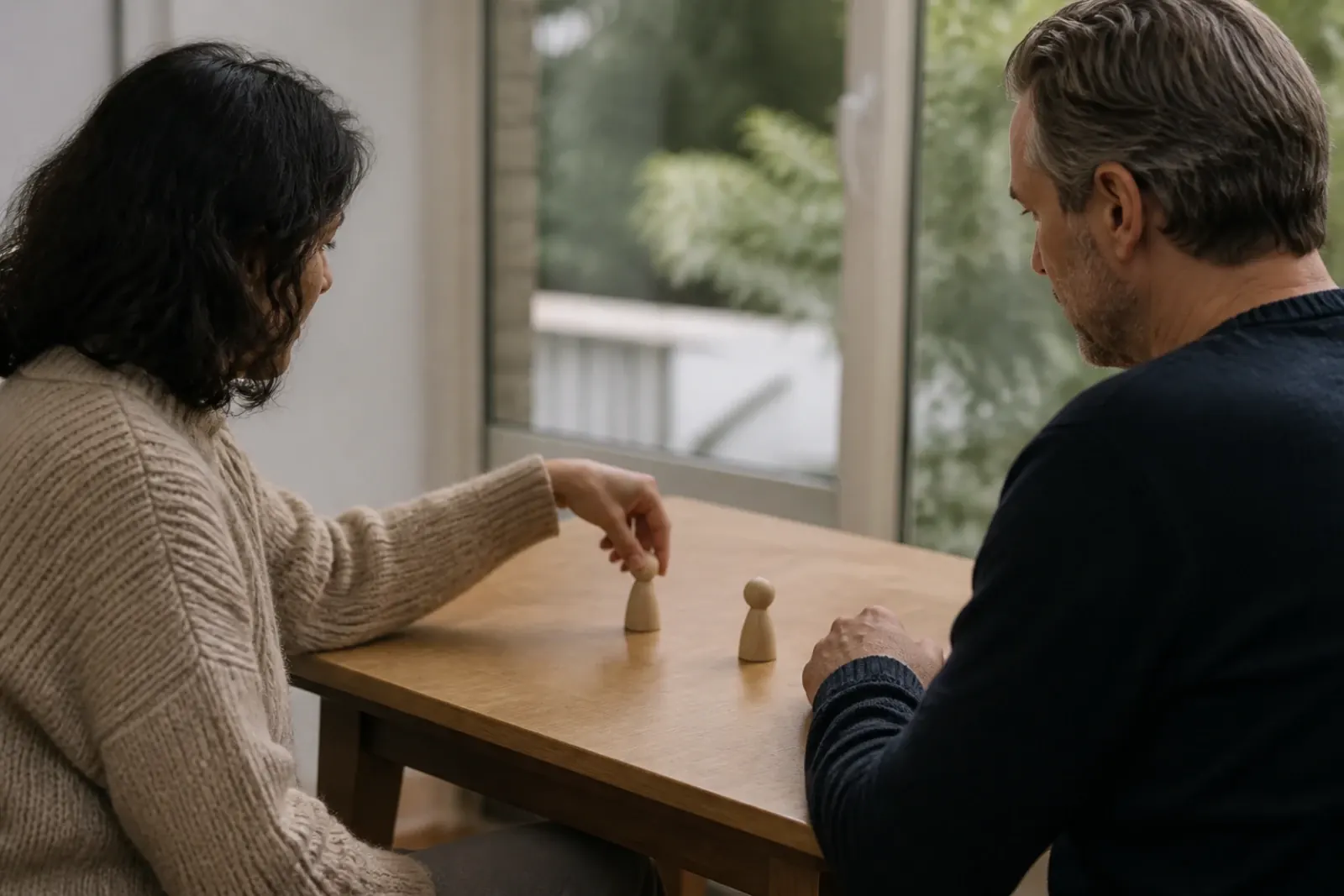
What couples bring me, what happens in a constellation about a relationship, and why you can come on your own when your partner does not want to.
Read moreNot sure who or what is the right match for you? You’re welcome to write before deciding anything, with a question of your own.
What are you looking for?
1 / 2
Fields marked * are the ones we need.
Your message reaches our practice coordinator, who passes it to the right practitioner.
Online anywhere, or in person in Brussels. If you already know which session you want, book it. If you do not, ask us and we will work it out with you.
See the kinds of sessionLooking for a different path?
Scope and safety
Sessions support change in how you live, relate and decide. They sit alongside medical and psychological care, and they do not replace it.
If you are in crisis right now, or you are having thoughts of harming yourself, please turn first to your doctor, to a crisis line where you live, or to the emergency services. If you are being treated for a psychiatric condition, or you have questions about medication, that care belongs with your prescriber, and our sessions can run alongside it.
If you are unsure where to start, ask us. We will tell you honestly whether this is the right support for you now.
Your cookie preferences
Essential cookies always on
These remember your cookie choice and protect our forms from spam. The site cannot work without them.