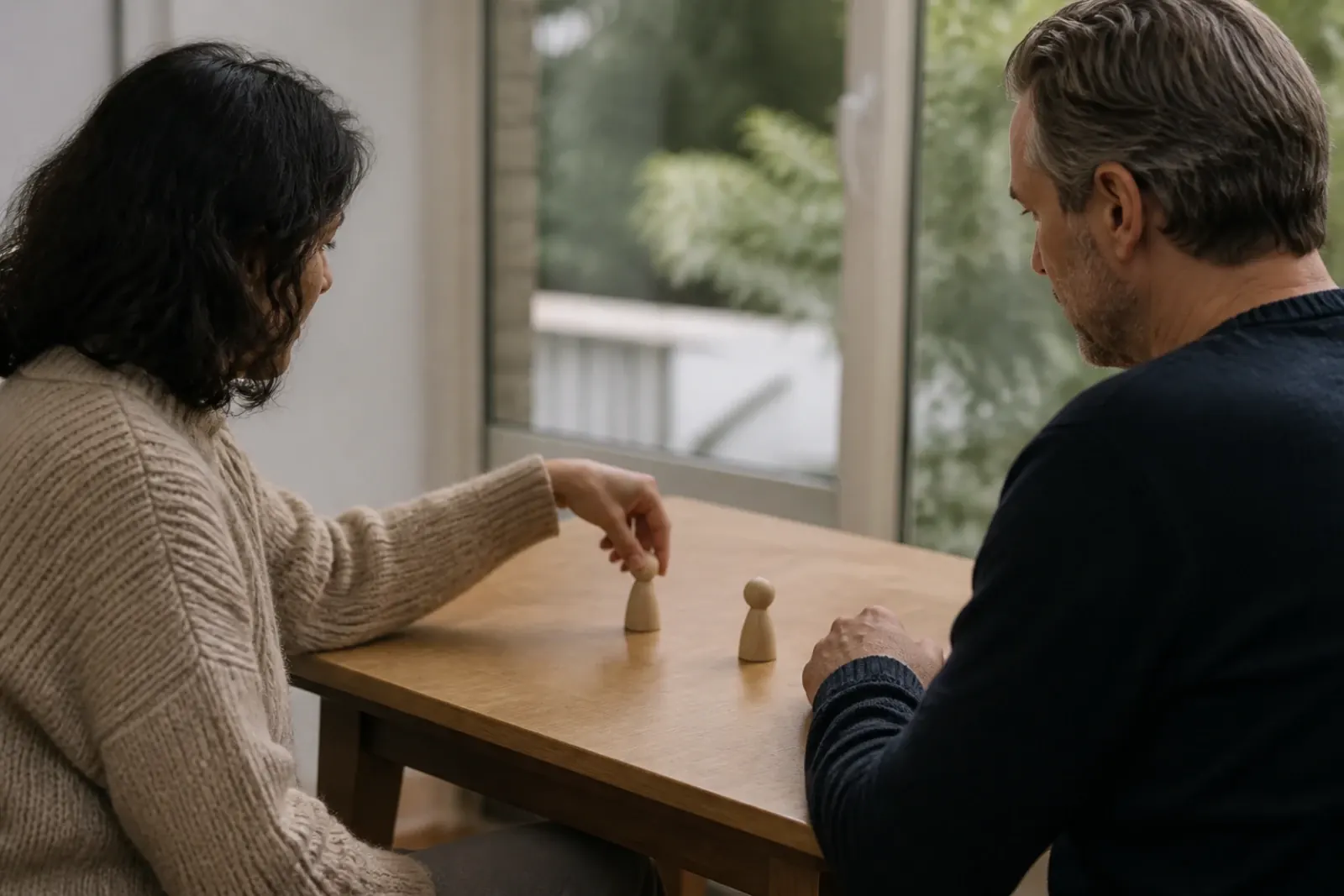
Most couples who write to me about a family constellation know their own argument by heart. How it starts, the sentence that makes it worse, who goes quiet and who leaves the room, and roughly how long it takes before things feel normal again.
What they can’t do is get underneath it. They’ve explained themselves to each other many times, carefully and at length, and the explaining hasn’t changed anything.
That’s usually when somebody looks for something other than more talking.
What couples come to me with
You keep having the same arguments. You know how they start and you can almost predict how they will end, but you still can’t find a different way through them.
You’ve grown apart. There’s less closeness, affection or sex, or you feel more like housemates than partners. One of you reaches for connection while the other pulls away.
Trust has been damaged. There may have been an affair, a betrayal, something kept secret, or simply years of promises that no longer feel believable.
The relationship feels unequal. One of you carries more of the children, the house, the money, the planning or the emotional load, and resentment has started to build.
You’re facing a decision you can’t seem to make together: whether to move, stay abroad, go home, change jobs, have a child, or make another choice that will shape both of your lives.
Something changed the relationship. A baby, illness, grief, migration, work pressure, financial stress or difficulties with your families can change roles and expectations that once seemed settled.
Or you’re no longer sure whether to stay together. You may be thinking about separation or divorce, already living apart, or trying to understand whether there is still a relationship you both want to repair.
You don’t need to know exactly what the problem is before you come. Understanding what is happening between you, and what needs to happen next, is part of the work.
What happens in a constellation
A conversation about a relationship runs on explaining. You give your version, your partner hears a case being made and starts assembling the reply, and then you hear that reply as proof of exactly what you were trying to say.
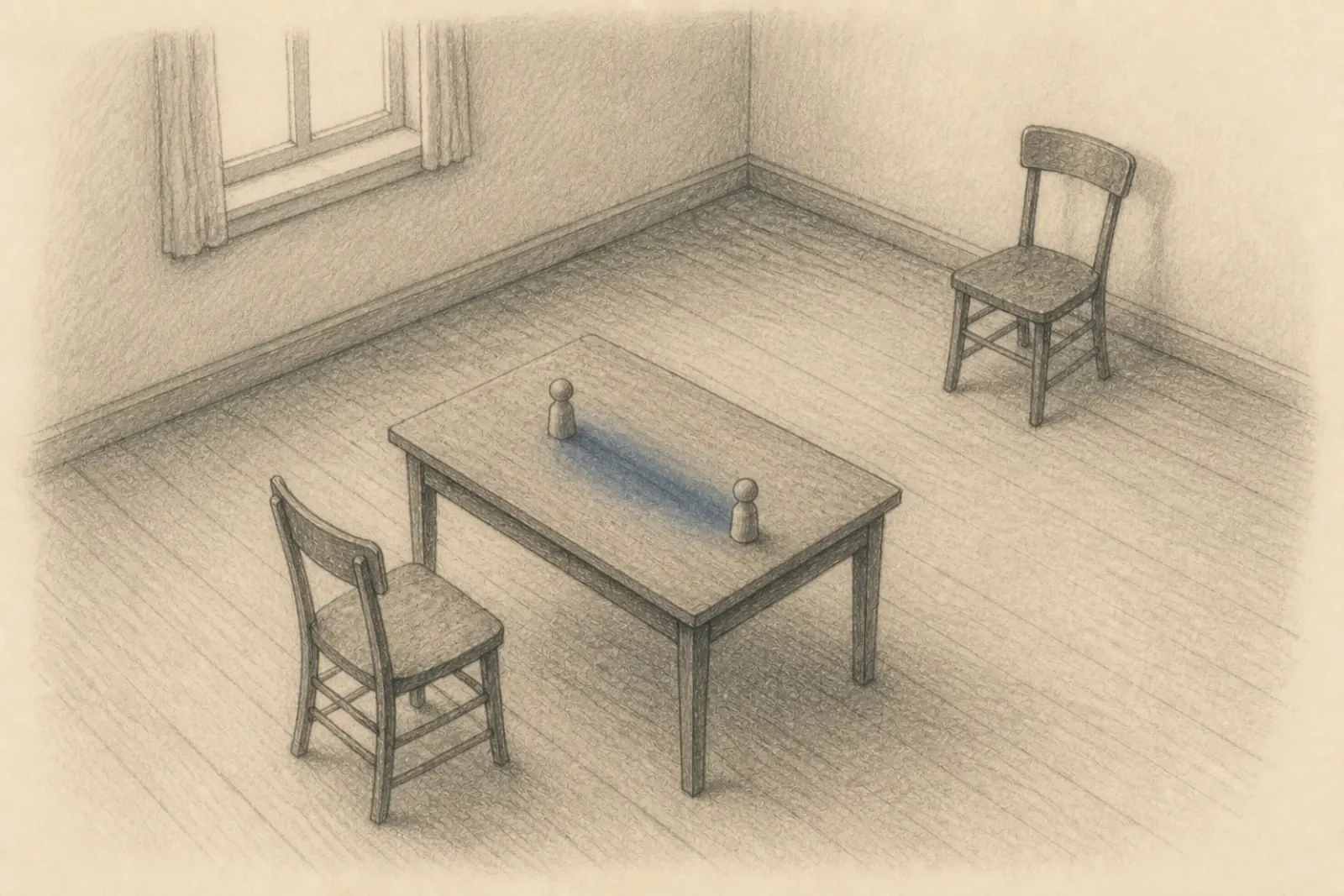
A constellation doesn’t run on explaining. Instead of talking about the relationship, we give it a shape you can see: you, your partner, and whatever else turns out to be standing in it. Then you’re not making a case any more. You’re looking at something, and there’s nothing in front of you to answer.
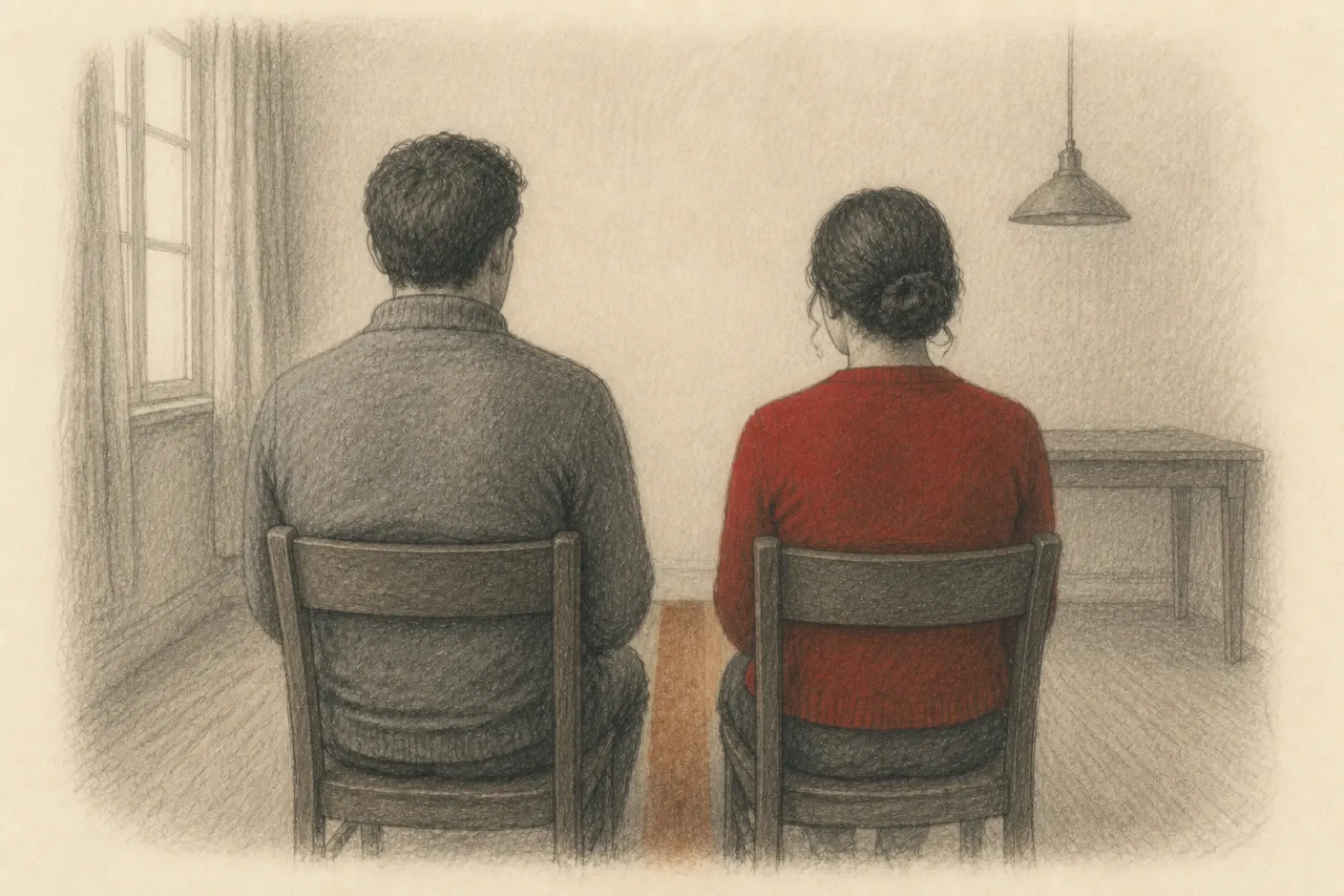
What shows first is usually something you already knew and had no words for. Which way the two of you are turned, for instance. Towards each other, or side by side looking out at the life you’re making. A relationship needs both, and couples in trouble have usually stopped moving between them.
Often something older is standing there too. Neither of you arrived as a blank page, and if you spent years reaching for a parent who wasn’t reachable, that reaching doesn’t stop because you grew up and fell in love. It goes looking, often in a partner, who can’t fill it however much they love you, because it was never addressed to them.
That’s almost impossible to see from inside a Tuesday evening argument, and often perfectly clear once it’s standing in front of you. Seeing it is usually the first relief, because it stops being anybody’s fault.
You don’t need your partner to come
I hear the same sentence often. I’d like to do something about this, but my partner won’t come.
They don’t have to. Whatever happens between you, you’re half of it, and your half is the half you can actually move. Work on it and your partner is dealing with a different situation, whether or not they ever hear a word about the session.
You don’t need their permission, you don’t need to agree about what the problem is, and you won’t be asked to put their case fairly. You’re not here to speak for the relationship. You’re here about your own side of it.
Or come together
I see couples together as well, in conversation and in constellations.
Come together when the problem is something you want to work on together. You don’t need to be able to talk about it calmly or already know how to get unstuck. That’s part of what I can help with.
When you’re both there, one of you brings the question and we start from that. What comes up may belong mostly to that person’s family, and the other may have little to do but give them room, which turns out to be a lot. Another time we start with the other one.
You don’t have to decide this before you write to me. We work it out together.
Starting
Tell me what keeps happening between you, in your own words. You can give me the unfair version.
I work in English, Spanish and Portuguese, in person and online.