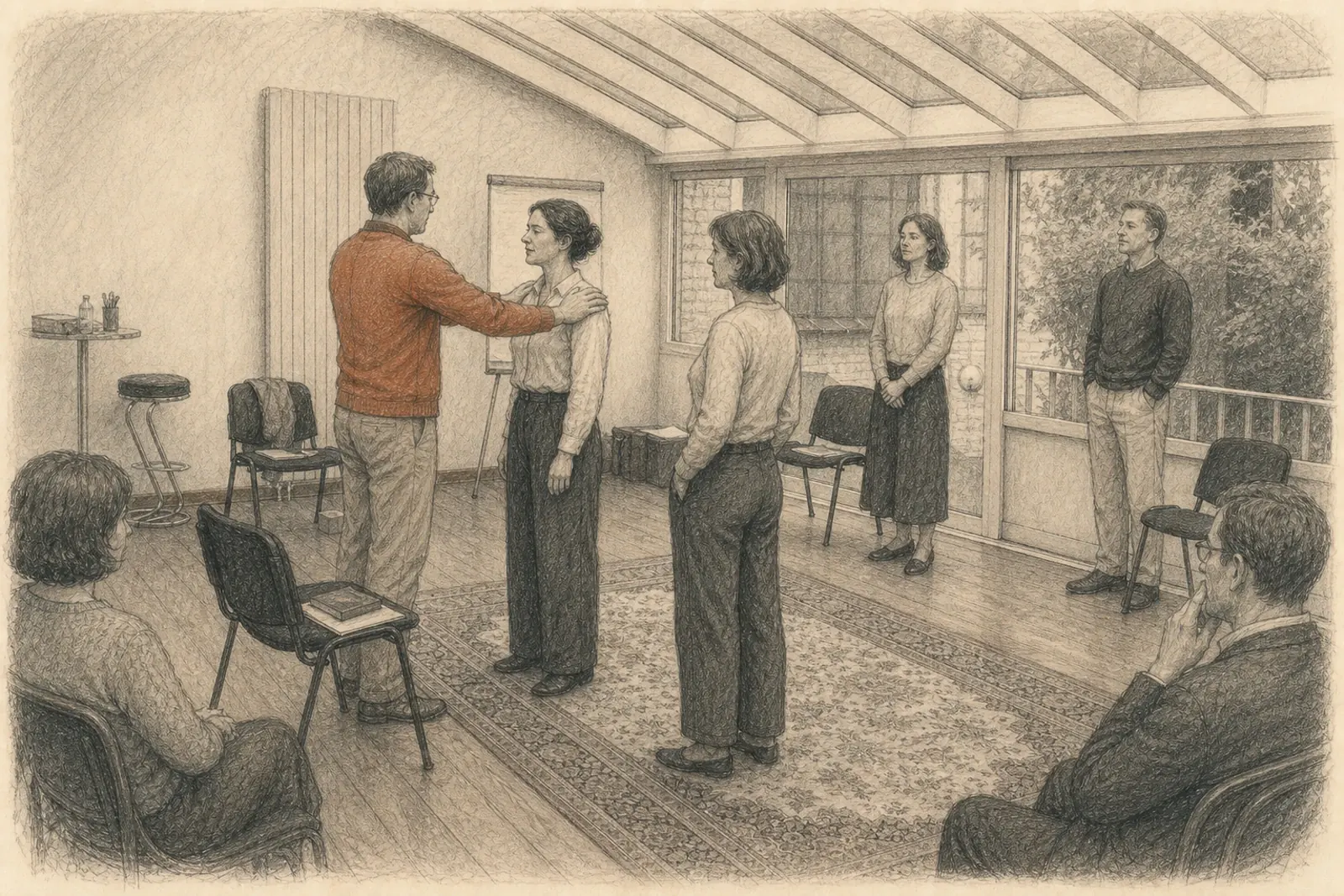
People who ask me what techniques family constellations use are usually braced for something esoteric. Then I list them, and the list is disappointingly concrete: a structured interview, a spatial image, a particular way of using people's perception, movement, and short spoken sentences. Five techniques. Everything else you might see in a constellation is one of these five doing its job.
Teaching this work means taking it apart far enough that someone else can understand what you're doing, why you're doing it, and eventually do it themselves. Here's the toolbox, piece by piece, with what each tool is actually for.
1 · The interview
The least photogenic technique and the most important one. Before anything is placed or positioned, the facilitator and the client work out three things in plain conversation: what the issue actually is, what the client wants instead, and the bare facts of the family. Not the stories or the verdicts, the facts: who belongs to it, who died young, who left, what large events passed through.
I tell my trainees that the quality of what follows depends heavily on how well this interview is held. A vague issue produces a vague picture. When you watch a constellation that seems to wander, the wandering usually started in the interview, ten minutes before anything visible went wrong. It's also where the client's authority is established: their words, their language, their goal. The facilitator brings craft to this conversation; the client brings the expertise on their own life.
2 · The spatial image
The technique that gives the method its name. The client's inner picture of their system is set out in space: people standing in a room, figures on a tabletop, felts on a floor, or positions held purely in the imagination. What matters isn't the medium. What matters is that relationships become geometry: distance, direction, who faces whom, who can't.
This is the move that changes what kind of information is available. Ask someone to describe their relationship with their father and you get their practised account, the one they've told before. Ask them to place him in a room, and the placement can show something the account left out: behind them, at a distance, facing away. The spatial image makes different information visible, and once it stands in the room, client and facilitator can look at it together, side by side, rather than at each other.
3 · Representative perception
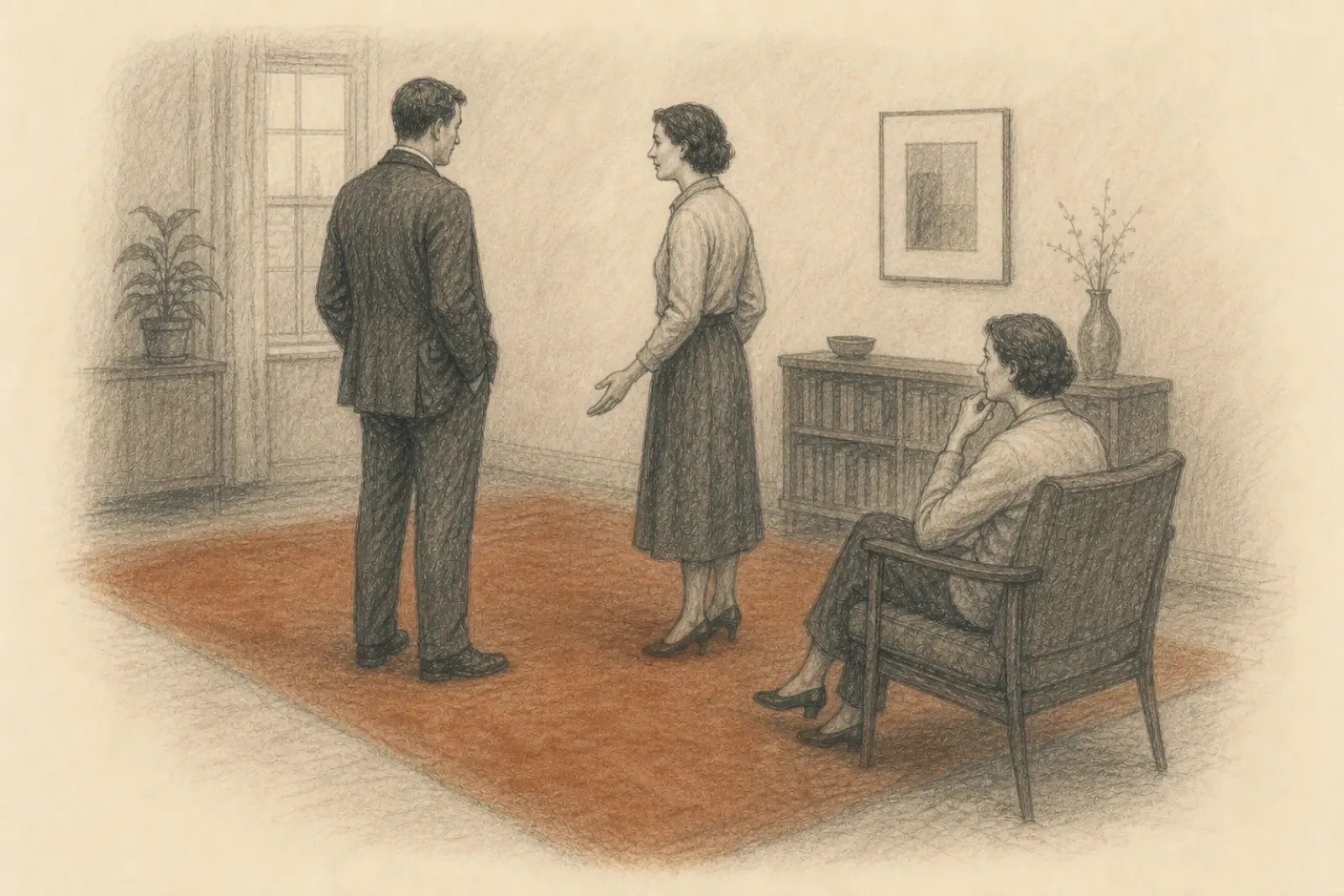
The technique people come with questions about, so let me describe it exactly. In a group, people who know nothing about the client's family stand in for its members. They're asked to do nothing except notice what arises where they stand, and report it in the first person: it feels heavy here, I can't look at her, from this spot I'm calmer. Practitioners repeatedly observe correspondences between what representatives report and the system being explored, sometimes in surprisingly specific ways. That recurring observation is what the group form of constellation work is built around.
We call the phenomenon representative perception, and the discipline is in how it's held. A representative's report is a feeling, not a fact about anyone's family. It's data to work with, checked against the one person who can check it: the client. The facilitator's own impressions are held the same way, as hypotheses offered for checking, never as readings delivered from authority. A constellation shows how a system feels from inside its positions. It doesn't tell anyone the truth about their mother.
In one-to-one work this technique doesn't disappear; it changes instrument. The client's own bodily experience becomes a source of information, position by position, with the facilitator tracking breath, posture and tone alongside.
4 · Movement
A constellation is closer to a film than a photograph. Once the first image stands, it moves: a representative follows an impulse, or the facilitator repositions someone and watches what changes across the field. A father turned around to face his son. A grandmother given a place after decades outside the picture. Distance widened until a representative can breathe again.
Movements are experiments, and they're offered as experiments: would you be willing to try standing here, let's see what happens if. A movement that makes things worse is not a failure; it's information, and often sharper information than an improvement. The direction of all of it is toward an image in which the people standing in it can carry more ease than they could in the one the client walked in with.
5 · Statements
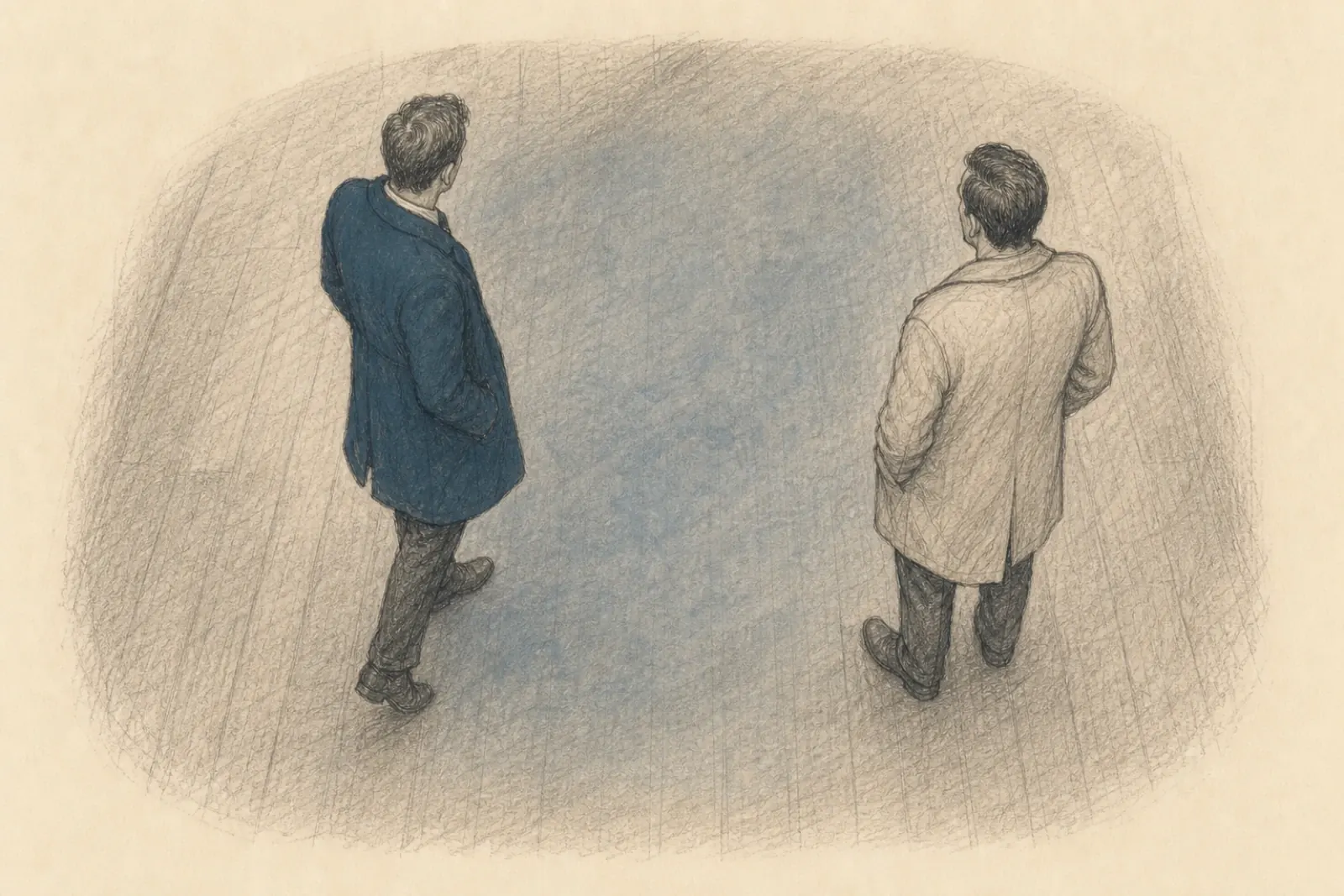
The most precise tool in the box, and the one we systematise most carefully in training. At certain moments the facilitator offers a representative, or the client, a short sentence to say aloud and try on. Not conversation: single sentences, plain and non-judgemental, spoken from one position to another to test and settle what the field is showing.
In the Al-Ma Model, we teach statements as doing three kinds of work, in a sequence that repeats across much of a constellation. First they acknowledge what is: naming what was unseen or unsayable, as simply as "you belong", or "you lost your first son". Then they restructure: sentences that put weights back where they belong and people back in their own places. And finally they differentiate, marking what belongs to whom, which is where some of the method's best-known sentences live: "I thought your fate was mine, but I see it belongs to you." "I'm the small one, and you're the big one."
A good statement lands physically. You can watch a representative's shoulders drop when a sentence fits and see nothing at all happen on a nearly-right one. That visible difference is part of the feedback loop the facilitator steers by, and learning to write statements that land, in the client's own words rather than from a script, is one of the harder crafts we teach.
What holds the five together
None of these techniques is used by feel alone. In our training I teach the reading and moving of the field through the Field Compass, part of the Al-Ma Model: which technique serves at which stage, what to explore before you restructure, when to move and when to leave something alone, and when a constellation has reached enough.
Knowing when enough has happened is what keeps the five techniques from becoming a hunt for effect. A constellation doesn't run until something dramatic happens. It runs until there's sufficient shift for the client to stand in a freer relationship to what they came with, and then it stops, grounded, with time protected to arrive back. The quietest intervention that reaches the goal beats the most impressive one that doesn't.
If you want to see how these techniques fit into a whole piece of work, the family constellations page walks through the method end to end. And if you're curious enough to want the craft itself in your hands, that's what we train.