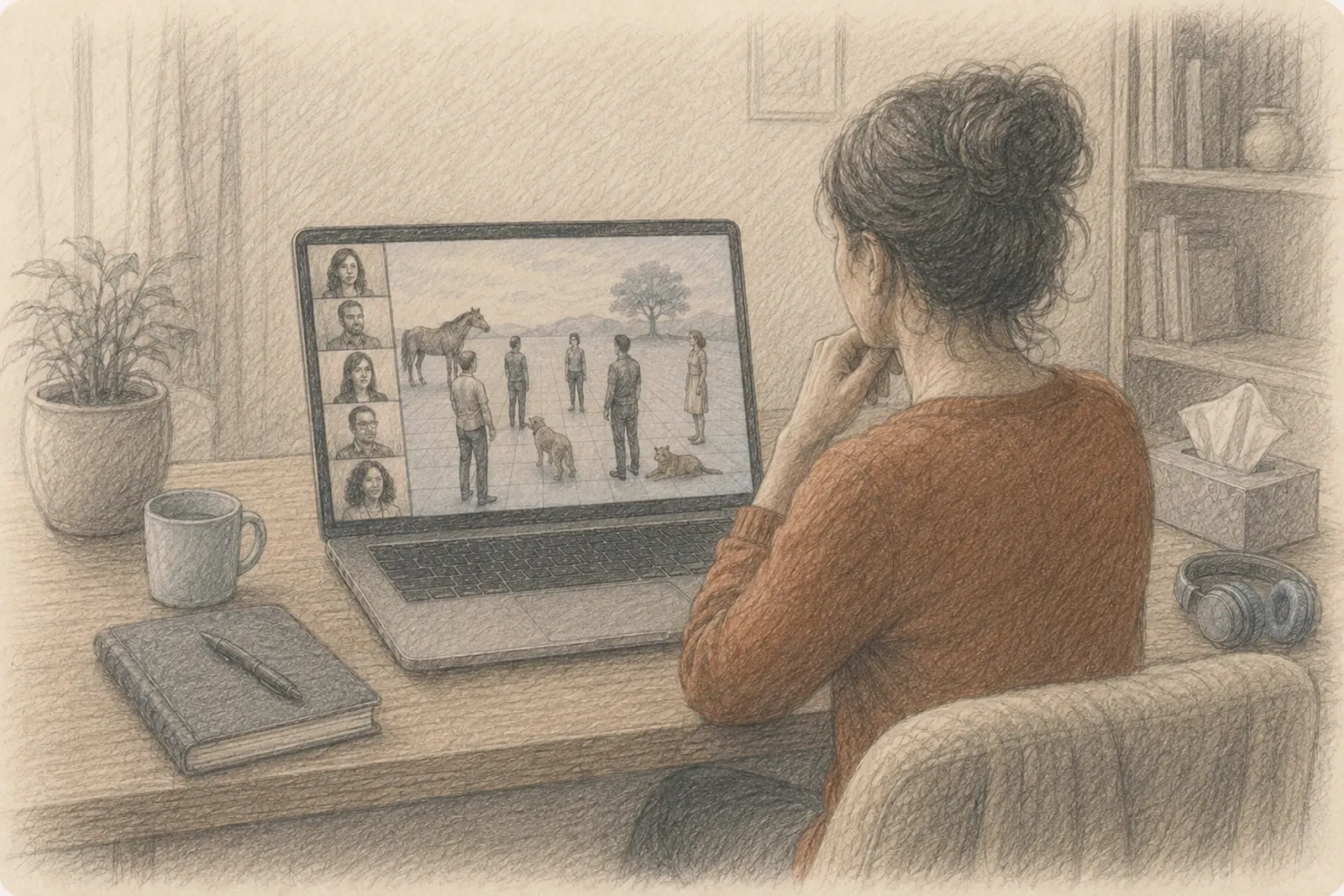
The first question is almost always the same. Can a family constellation really work through a laptop?
I’ve worked with constellations online since 2010. In individual sessions, the difference is usually much smaller than people expect. We still sit together, talk about what brings you, and build the constellation from there.
Group work changes more. In a physical workshop, representatives take up positions with their own bodies in the room. Online, the constellation is built in a shared three-dimensional space, where each representative has their own position, perspective and figure to move.
Both can work very naturally online. What changes is not the basic question we are working with, but how we give the system a visible form.
What changes when the room is online
The most obvious change is simply that you are in your own space. You need somewhere private where you can speak freely, and it helps to have a screen large enough to follow what we are doing without strain.
For individual work, that may be almost the whole difference. If we work in the mind’s eye, there is no special online version of the method. If we work with figures, the constellation board moves onto the screen.
Group work needs more translation because the representatives are no longer standing on the same physical floor. The shared online space gives us that common floor instead.
The main ways people work online
There is no single online version of family constellations. You will generally come across three ways of working.
The mind’s eye. Common in individual sessions. Nothing needs to be placed on a screen. You imagine the people or elements involved and notice where they appear, how close or far away they are, which way they face, and what changes as the picture develops.
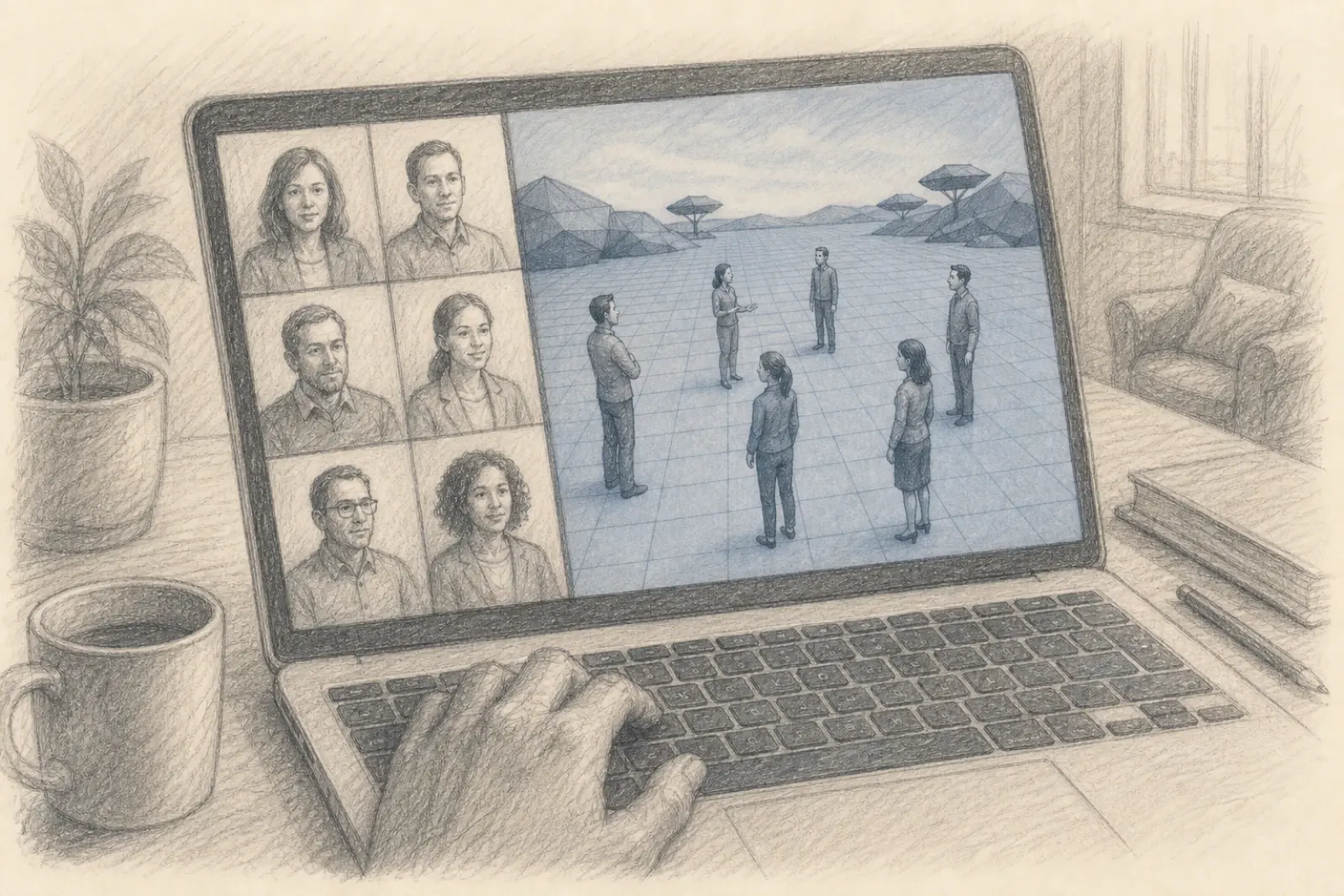
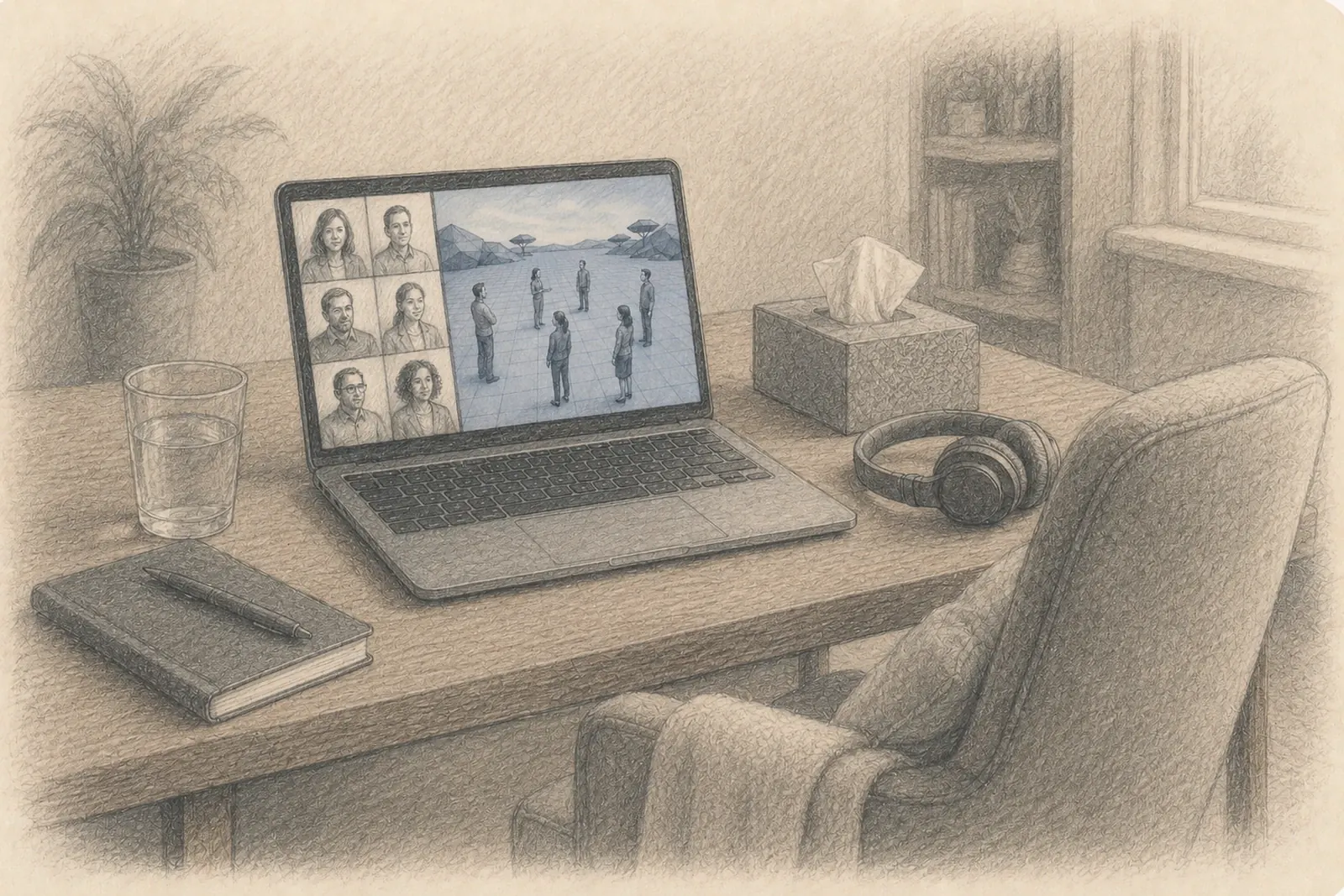
A shared online space. Everyone enters the same three-dimensional constellation from their own perspective. Representatives control their own figures, while the facilitator can move through the wider scene and guide what the client sees.
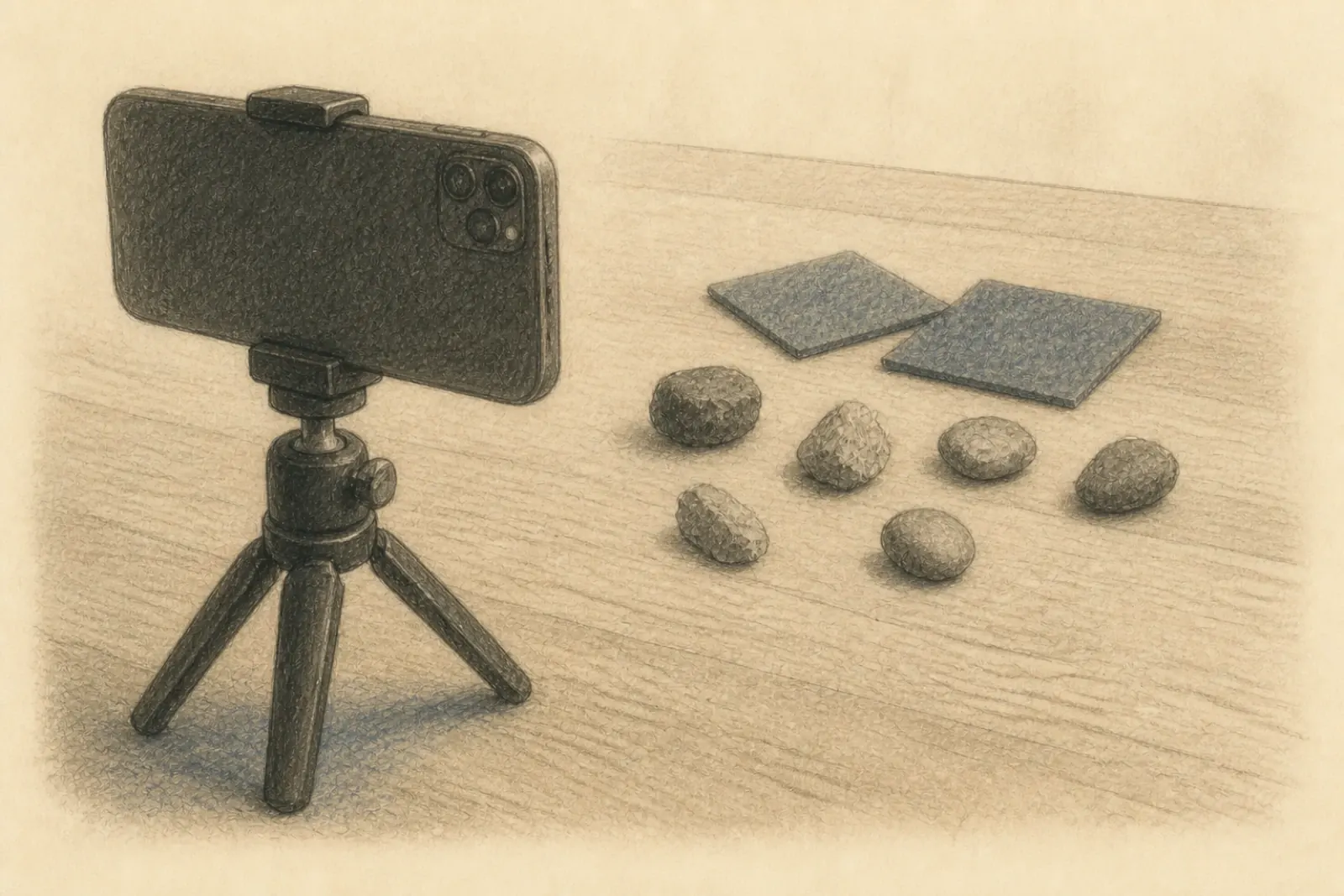
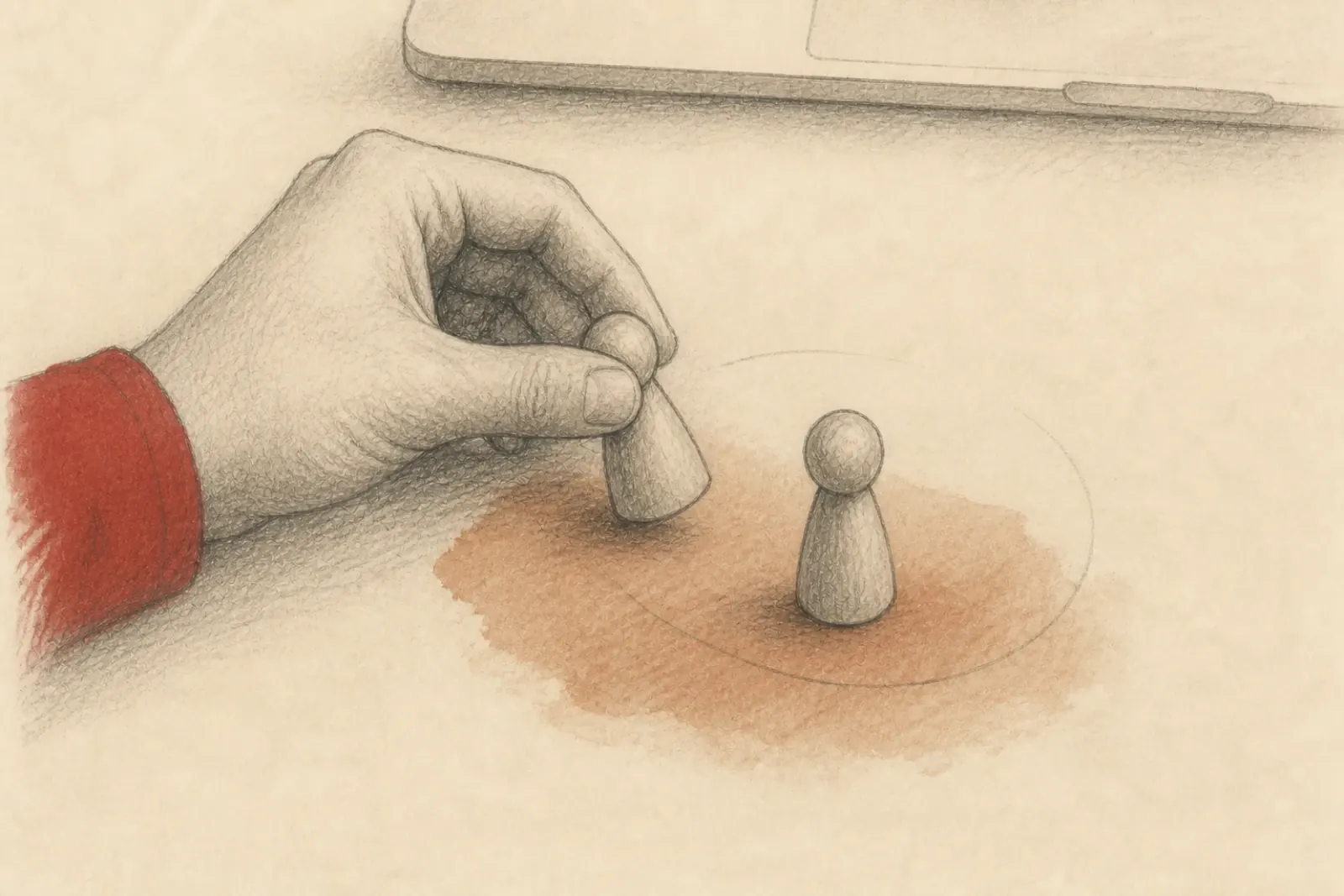
Physical figures on camera. Some facilitators use small figures, stones, felts or other objects on a tabletop and point a camera towards them so the arrangement can be seen online. The figures are moved physically rather than on screen. I do not work this way myself, but you may encounter it elsewhere.
In my own work, I use the mind’s eye and the shared online space. Which one we use depends on the question and on what gives us the clearest way to work with it.
Working in the mind’s eye
The mind’s eye needs very little from you. You do not need to visualise beautifully or produce a clear picture on command. We might begin simply by picturing one person in the room.
I might ask where you see your mother. Whether she feels close or far away. Where you would place her. Where your attention goes when another person enters the picture. What changes if somebody turns.
Sometimes the image is visual. Sometimes it is more like knowing where someone is. Sometimes you notice a bodily response before you see anything at all. We work with whichever form it takes rather than trying to make it look a particular way.
This way of working changes very little online because the constellation is already being built internally. The screen is where you and I meet; the picture itself is yours.
Working in a shared online space
The easiest way to understand the shared space is to think of it as a supercharged constellation board.
We still work with position, distance, direction and movement. We can see who is close to whom, who is facing away, what sits between two people, and what changes when someone moves.
Technology also gives us things a physical board cannot. In group work, each representative controls their own figure and sees the constellation from their own position. They can turn, move closer, step away or change direction themselves.
The facilitator can see the whole constellation and move through it from different viewpoints. The client’s view can also be guided, so sometimes they see the system from above and sometimes from a particular position inside it.
There is also a large library of figures, objects and environments to work with. A country, a boundary, a burden, a business, a goal, a resource or something more symbolic can have a visible place. That gives us a lot of room for metaphor when the question calls for it.
If we are going to use the shared space, you receive the practical information beforehand. You do not need to learn complicated software during the constellation itself.
How a one-to-one session runs
We begin with a conversation. What brings you. What feels difficult or stuck. What you would want instead. Then we gather the family facts or other information that matters for the question you are bringing.
From there, we build the constellation in the form that fits the work. We may use the mind’s eye, or we may place the people and elements that matter in the shared online space.
Then we work with what appears. Someone may turn. A distance may change. Something that has had no place may need one. Another element may need to enter. We make changes carefully and keep noticing what happens as the constellation develops.
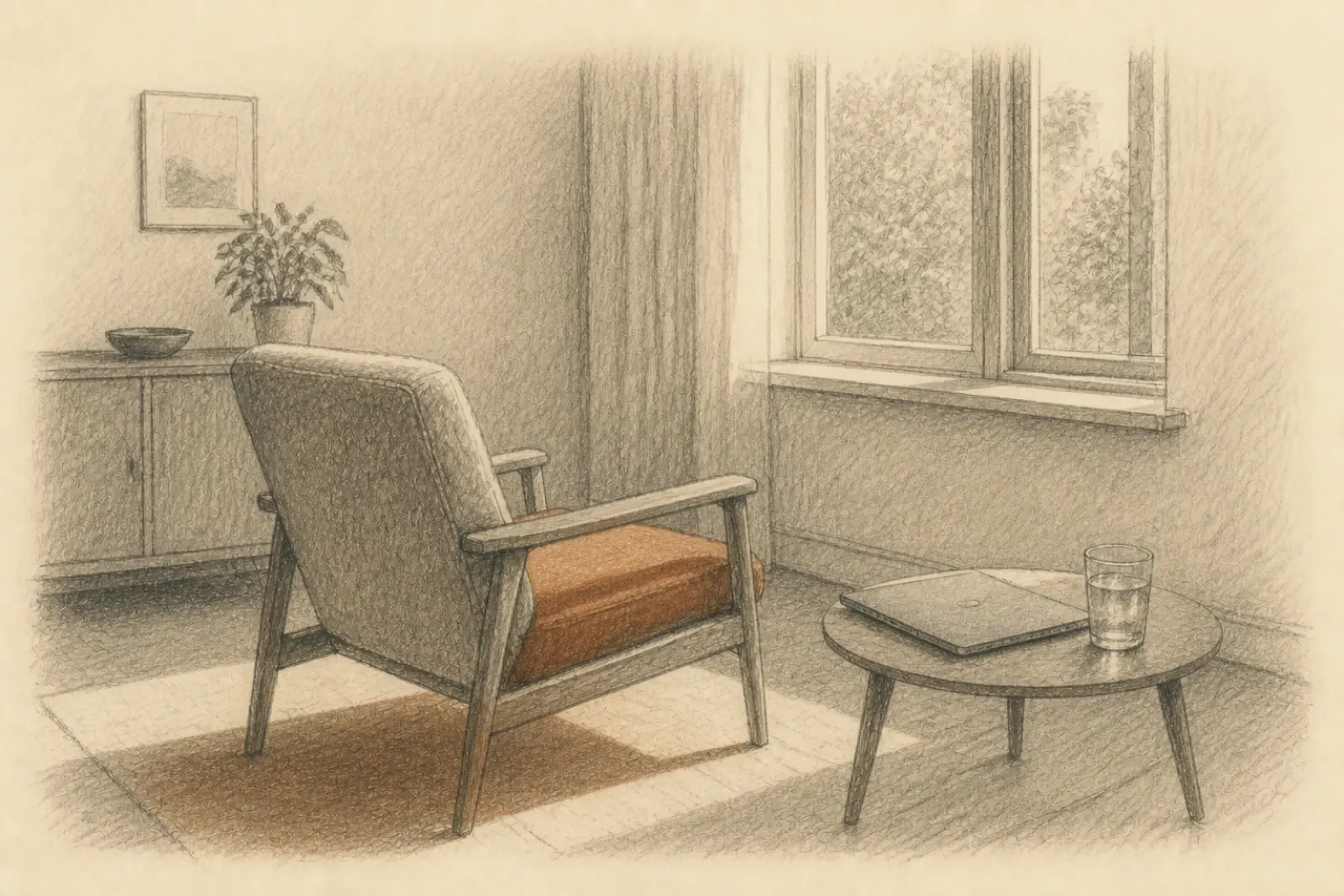
The experience itself is fairly ordinary. You are sitting in your own chair, I am sitting in mine, and we are talking and looking at something together. The laptop is simply where we meet.
We stop when we have reached enough for that session rather than trying to force the constellation towards a dramatic conclusion. It is also useful to leave a little room afterwards before moving straight into the next demand of the day.
How it works in a group
Someone brings an issue and other people are invited to represent the people or elements involved. Each representative is given a place in the shared constellation.
From there, the process is very similar to representing in a physical room. You pay attention to what you notice from where you are, report it, and move when there is an impulse or invitation to do so.
The difference is that your movement happens through your figure. Because everyone controls their own, the constellation can develop as a shared space rather than as something one person operates for the group.
You do not need to be particularly comfortable with technology. We take you through the shared space before we begin, and the facilitator keeps track of the wider picture while you stay with your role and what you are noticing.
How representing works online
If you are in a group, somebody may ask whether you would be willing to represent a person or an element in their system. A father, a sister, a country, a company, an illness. You can say yes or no.
If you say yes, you take up a position in the constellation and pay attention to your experience there.
Where does your attention go? Do you want to look towards somebody or away from them? Do you want more distance or less? What do you notice in your body? Is there an impulse to move?
You report what you notice rather than trying to explain or interpret it.
Representatives sometimes report sensations, impulses or reactions that feel unexpectedly relevant to the person whose constellation it is. We treat those reports as information to explore, not as facts about anyone’s family. You do not need to believe any particular explanation for why representative perception happens.
Feeling nothing is also information. There is nothing you need to produce for the role to be useful.
At the end, we close the role clearly and you return to being yourself.
How movement works
A constellation develops through movement. Once the first picture is there, we begin to see what happens when something changes.
You might feel an impulse to move yourself, or I may ask whether you would be willing to try another position. Moving closer, stepping back, turning towards someone or looking elsewhere can all change what becomes visible.
The point is not to find the “right” position as quickly as possible. The movement itself gives us information. If something changes for the better, we notice that. If it becomes more difficult, that matters too.
Online, movements are made slowly enough to notice what happens along the way rather than only where the figure ends up.
Creating your space
The technology matters less than the room around it.
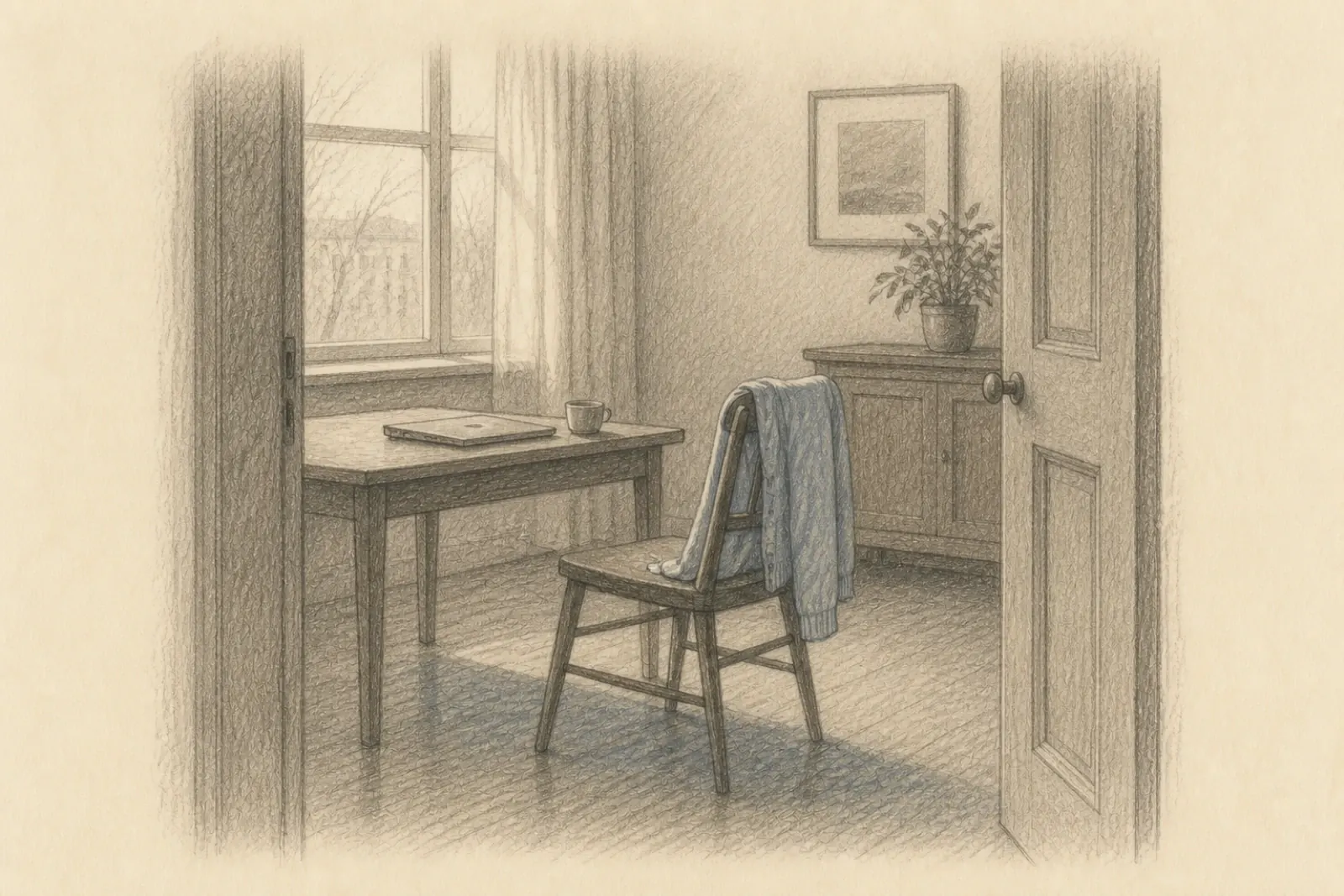
Find somewhere private. Quiet helps, but privacy matters more. You need to know you can speak freely without wondering who might hear you.
Sit comfortably. Set the screen high enough that you can look at it without spending the whole session bent over a laptop.
Light your face from the front. A bright window behind you turns you into a silhouette. Being able to see your face clearly helps when we are working online.
Have something to drink nearby and put your phone on silent. Tissues within reach are useful too. Easier to have and not need.
Use headphones if you like them. They are optional, but many people find that they make the conversation feel more private.
Use a laptop if you can. A tablet can work and a phone can work in some situations, but group work is much easier on a larger screen.
The full practical list is on working online.
Give your attention time to arrive
Most of us use the same screen for work, messages, meetings, entertainment and distraction. Then we open another window and ask ourselves to become attentive to something very different.
It helps to mark the transition. Arrive a few minutes early. Close the other tabs. Put both feet on the floor. Look around the actual room for a moment before looking into the screen.
If you become distracted, overwhelmed, numb, or notice yourself explaining everything instead of staying with what is happening, say so. That is useful information too.
And if you can, leave a little space afterwards before moving straight into work, messages or another meeting.
How to prepare
You need less preparation than you might think.
Know what you can about your family. Names, relationships and larger events can be useful. Who belongs to the family. Who died young. Who left. Who was separated from the family. Earlier partners. Migration. Illness. War. Major losses or changes.
You do not need exact dates or a complete family history. If there are gaps, leave them as gaps. Bring what you know.
Do not pressure yourself to prepare a perfect explanation of the problem. Bring what has been bothering you. We can make the question clearer together at the beginning of the session.
Give yourself a little time on either side. Arrive a few minutes early and, if possible, avoid scheduling something demanding immediately afterwards.
If it’s your own constellation, the technology is not your job
People sometimes worry that they will have to manage the shared space while trying to concentrate on their own constellation. You do not.
In group work, somebody else operates what needs to be operated for you. You talk, watch, and tell us what you notice. In an individual session, the technical side is kept equally simple.
The point of the technology is to give the constellation somewhere to happen, then get out of the way.
If you are considering an online constellation and want to talk it through first, contact us. For the practical setup, working online has everything in one place.