


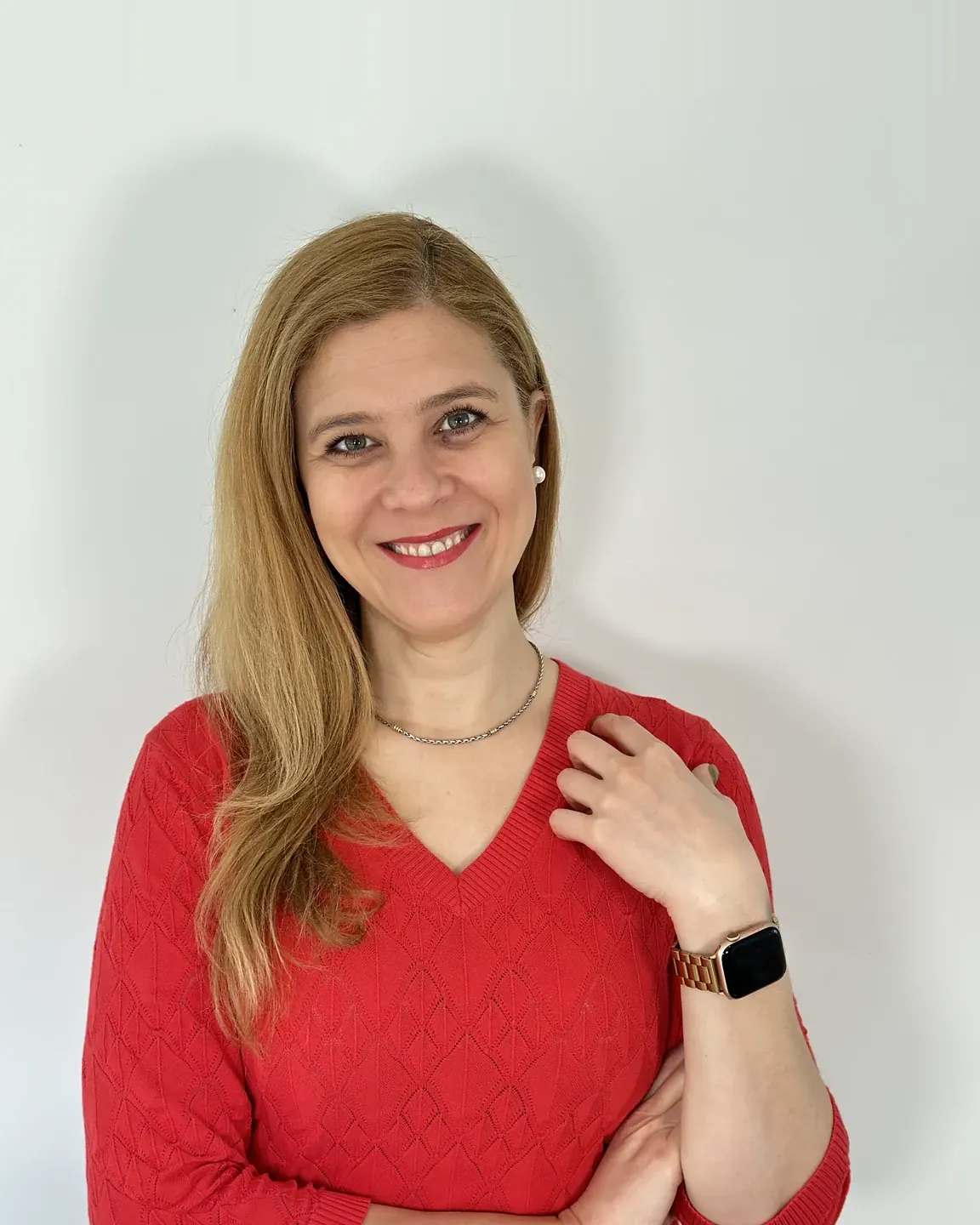
Cecilia Altieri
Co-founder and Director
Has trained facilitators all over the world.
Meet Cecilia →EISEC facilitator training
Everything the family constellation training contains, in one place: the curriculum semester by semester, how the teaching and supervision work, what marks your progression, who teaches, what it costs, and how a group forms. Read it in order, or jump straight to what you came to check.
3
years
6
semesters
30
modules
360
live teaching hours
Live online
A small closed group
Certification on the full track
One weekly slot, kept for three years
Chapter 1
The shape of the three years, what each semester makes you able to do, and what a week asks of you.
The three-year arc
Three years, one progression: each year rests on the one before it, and each is named for what it adds. The six semesters below tell the same story at full depth.
Year 1
The first year lays the ground everything else stands on: how to hold a room safely, how to work trauma informed, and the five levels of the Systemic Tree, from survival to individuation, read one level at a time.
By its end you can map a family across multiple generations, keep a group steady while it works, and read a living system: where it holds together, what it did to survive, and where it is stuck.
Year 2
The second year turns reading into craft. You learn the interview, the hypothesis and the intervention: every step of a constellation, in the group setting and one to one, and then the themes clients actually bring.
By its end you have facilitated full constellations inside your own group, under supervision, and can work death, illness, money and love, each with its own dynamics. From here you are also free to practise outside the training.
Year 3
The third year goes inward, then beyond: constellations in the mind’s eye, work with inner parts and the timeline, and structural constellations, where what you set up is no longer a family but a decision, a problem, a goal.
By its end you can run the whole method unaided, in both settings, with three years of supervision behind you. The final module turns to your future with constellations, designed before you leave.
Semester by semester
Thirty modules across six semesters, with each one building on what came before. Follow how your understanding, practice and capability develop across the three years.
Semester 1 Foundational
You begin with the conditions that make systemic work possible: creating safety, understanding the field, working trauma-informed, developing your therapeutic stance and learning to map a family across generations.
By the end of Semester 1 you can create and hold a safe systemic space, recognise activation, work from a grounded therapeutic stance and map a family across three generations.
What you learn
What creates enough safety for constellation work, and the facilitator’s role in holding it.
What happens in a constellation field, what may emerge, and how to stay grounded in what is actually there.
To recognise activation and adapt the session to what the client can safely hold.
A relational way of facilitating that stays responsive to the client without taking over their process.
To map a family across generations and use that map to understand the wider system.
What skills you develop
Semester 2 Foundational
You learn to read a family system through the Systemic Tree, moving from survival and belonging through structure, balance and individuation to understand how patterns take shape and persist.
By the end of Semester 2 you can use the Systemic Tree to read how survival, belonging, structure, balance and individuation shape the system in front of you.
What you learn
How survival shapes a system, from immediate responses to patterns that continue across generations.
The ways belonging, loyalty and meaning connect people to their system and influence what happens within it.
To read position, role, function and responsibility, and see what changes when the structure shifts.
How giving, taking, obligation and entitlement shape relationships and the wider system.
How people become more themselves while staying connected, and what can interrupt that movement.
What skills you develop
Semester 3 Foundational
You learn the complete craft of facilitation: opening the field, interviewing, forming and testing hypotheses, intervening, and bringing a constellation to a close in both individual and group settings.
By the end of Semester 3 you can facilitate a complete constellation from first conversation to close, in both individual and group settings. This is the foundational milestone.
What you learn
To open a constellation, orient yourself in what emerges and form a working hypothesis.
To move from the client’s story to a clear systemic focus and a workable goal.
When and where to intervene, and how to read what changes in response.
The different ways to facilitate constellation work one to one, without a group of representatives.
To work with representatives while holding the client, the group and the constellation together.
What skills you develop
Semester 4 Advanced
You deepen the method through recurring themes in systemic work, learning how different dynamics appear around ritual, grief, health, money, success, love and couple relationships.
By the end of Semester 4 you can bring the method to complex themes such as grief, illness, money, success, love and couple relationships, adapting your approach to the dynamics each one brings.
What you learn
When ritual and symbolic action can help give form to something that is difficult to approach directly.
The systemic dynamics around death, loss and grief, and ways of working with them in constellations.
To explore illness and symptoms systemically, how illness impacts systems, and how the system impacts health.
How survival, belonging, structure, balance and individuation can shape money, work and success.
What happens when two systems meet in a couple, and what each partner brings into the relationship.
What skills you develop
Semester 5 Advanced
You turn the systemic lens inward, working with inner representations, parts, timelines and individual practice to understand and transform systems within the person.
By the end of Semester 5 you can work systemically inside the person as well as around them, using imagery, inner parts, timelines and individual constellation practice.
What you learn
To work with constellation processes through imagery and the client’s internal experience.
To recognise different inner states and understand them as parts of a wider inner system.
To work more deeply with an inner part, including its function, history and what it carries.
Ways of working across a personal timeline with experiences that continue to shape the present.
To bring the semester’s approaches together in a complete one-to-one constellation.
What skills you develop
Semester 6 Advanced
You take systemic constellation work beyond the family, applying it to decisions, problems, groups and structural questions while bringing the three years together into a practice of your own.
By the end of Semester 6 you can extend constellation practice beyond family systems, facilitate increasingly independently and bring the three years together into a practice of your own.
What you learn
To take constellation work beyond people and families, working with goals, options, obstacles and other elements.
To make the different forces around a difficult decision visible and explore them systemically.
Different structures for exploring a problem, a possible solution and the relationship between them.
To bring theory, technique and stance together while facilitating complete group constellations.
To integrate the three years into a way of practising constellation work that is recognisably your own.
What skills you develop
Explore another semester
How the programme runs
One class a week, three weeks of teaching, then a week given to constellations. The rhythm repeats every module, in the same weekly slot, for three years.
Every week · one class
Three hours, live
The theory
The exercises
The practice
Across the month
A week of constellations
Supervision, in many modules
Open workshops
Optional, never required
How you learn
This is the teaching method itself: one cycle, run through theory, demonstration and application, repeated at rising complexity in every module of the three years.
Stage 1 of 3
The theory first: the systemic concepts that make a dynamic recognisable at all. You cannot work with what you cannot name, so every module starts by giving you the names.
Stage 2 of 3
Then the same material from inside: exercises, representing, personal work, live constellations. Understanding a dynamic and standing inside one are different kinds of knowledge, and the training insists on both.
Stage 3 of 3
Then intervening: moving a system and reading what moves back, first in single steps, then whole. This is where facilitation begins, and it is rehearsed at rising complexity for three years.
Free introductory webinar
Come and see the training before you decide. In two hours we introduce the programme and do a first constellation exercise together, live. You will have met the way we teach before you commit to anything. No cost, no obligation.
Supervision
Supervision is how competence becomes visible, to you and to us. It enters progressively through the second half of the foundational stage, and it deepens as your facilitation does.
Level 1
Constellations are talked through after it closes, inside the training and in the online workshops you attend alongside it: what happened, what the facilitator saw and did, and why they did so. This is where facilitation starts becoming conscious.
Level 2
Single steps and single dynamics, rehearsed on their own under supervision before you carry them in a whole constellation. Isolating a move lets you repeat it, get it wrong safely, and be corrected while the stakes are still small.
Level 3
From Semester 4, supervision on your own facilitation inside the group: what you brought, how the session ran, and the judgement behind your choices. It builds a facilitator’s judgement rather than checking compliance.
Level 4
From Semester 5, once you begin working with clients of your own, supervision can follow you there. It runs when the group’s circumstances allow, so it is offered rather than guaranteed.
Throughout
Feedback runs through every level above: spoken in the room, specific, given by the trainers and by peers. Once internal supervision starts, you also receive supervision forms that are a complete record and analysis of your current facilitation.
Progression and what you earn
Across the three years, there are clear milestones in what you can do and formal records of what you have completed. Three transcripts document your progress along the way. The certificate marks completion of the full training.
Year 1 · Foundations
You can read a family across the five levels of the Systemic Tree, hold a room safely, and work trauma informed. The ground the craft stands on.
Semester 3 · Every step of a full constellation
Every step needed to run a full constellation has now been taught, in the group setting and one to one. And you get to practice your first full constellation.
Semester 4 · Internal supervision
Supervision on your own facilitation inside the group begins: what you brought, how the session ran, and the judgement behind your choices.
Semester 5 · Working with external clients
After the second year you may begin working with clients of your own through full constellations, and supervision can follow you there when the group’s circumstances allow.
Year 1, 2, 3 · A transcript each year
A transcript records where you stand, so a gap surfaced in one year is closed in the next.
Month 36 · One certificate
One certificate, earned once, at completion, with the graduation package. The programme’s full credential, and the whole curriculum stands behind it.
Your time and participation
Three kinds of time: the scheduled hours certification requires, the variable hours between classes, and an open programme alongside. They are counted differently, so they are shown apart.
Fixed and scheduled
360 live teaching hours across 36 months
One 3-hour class a week
The 360 live hours are a certification requirement, not an estimate of how long the programme runs: they are counted, and completing them is part of earning the certificate. The supervision the programme carries is required in the same way.
Variable, outside class
2 to 12 hours a month, depending on the period
Between sessions, at your own pace
Some months ask less outside class and others invite considerably more. Attendance at the live classes is expected; a missed module has a make-up route, decided case by case on availability and on what was missed.
Optional, alongside
Participation covered by the institute; only a constellation spot is paid
300+ hours available across the three years
The open workshop programme runs beside the training for all three years: monthly online workshops and several weekends a year, attended as a participant. It is genuinely optional, only some attend all of it. And for students, participation is covered by the institute: attending costs nothing, and you pay only if you take a constellation spot of your own.
Only the first card counts toward certification. The open programme alongside is there to be used: never required, never added to the 360, and nobody attends all of it.
Chapter 2
What this training asks of you, who it is designed for, and the institute behind it.
Who it's for
People come to this training from very different places. These are the four we see most.
Bring a systemic lens into your coaching. You learn to read the relationships around a problem rather than only the person in front of you, and to work with them in your own style.
A clear model and a teachable method, trauma-informed throughout, that sits alongside the methods you already use. You learn to work with the family system a client brings into the room, not only with the client.
If constellation work has already opened something for you, this is where you learn the craft behind it: a grounded method, taught in systemic theory and supervised practice, with room for the depth that drew you in.
Some are building a new practice around constellations, or moving one they already have towards it. Others come first for their own development and find the professional path opens later. The training holds both.
The origin
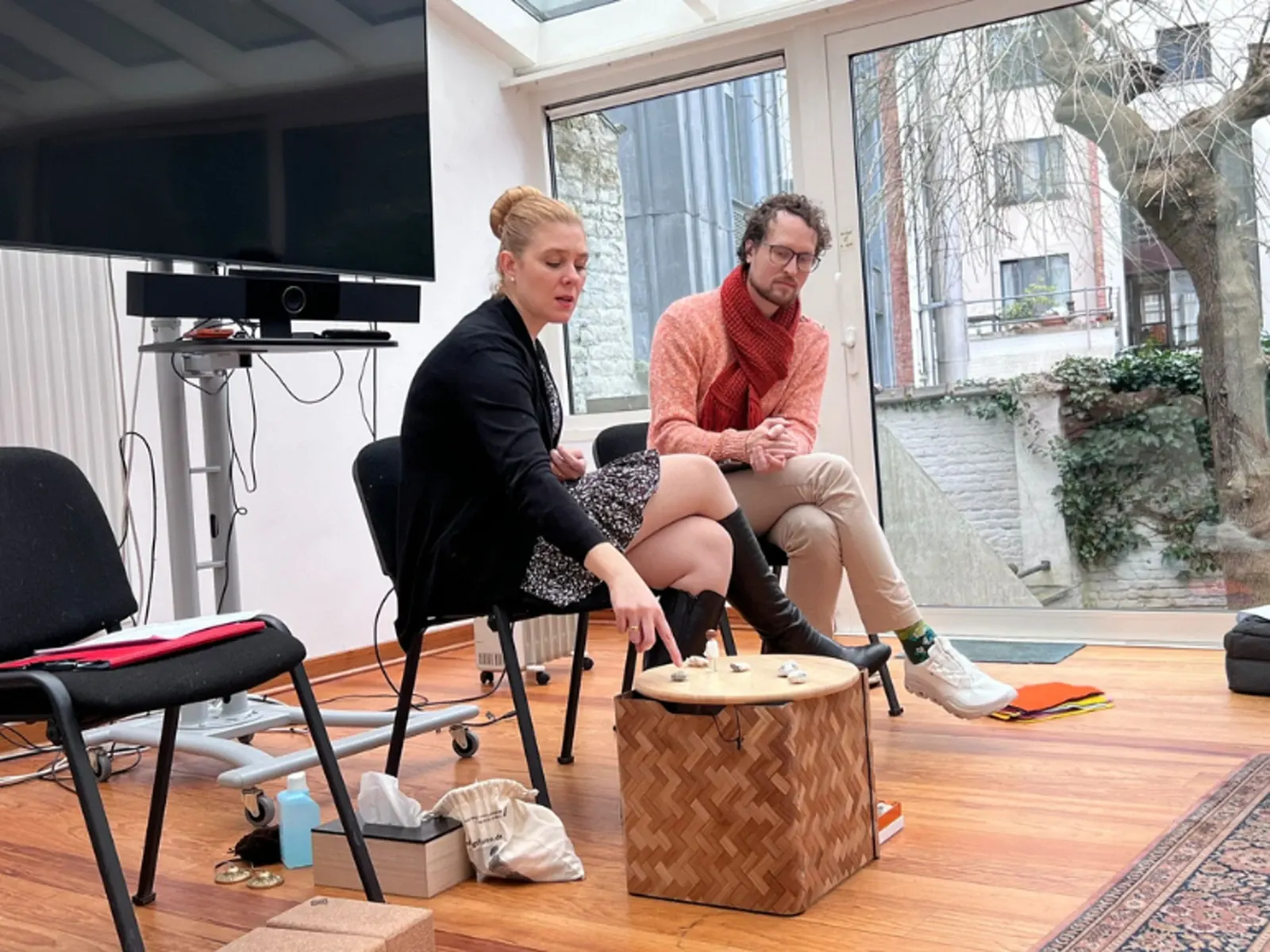
EISEC began in a practice room. Cecilia Altieri opened her practice in 2010, client-centred and trauma-informed, with Simon Maebe helping a great deal behind the scenes. For seven years the method deepened with real clients, before there was any thought of teaching, and what she learned in that room is what became the training.
The institute began with the first training, in 2017, and it began with a frustration. For years, Cecilia and Simon had trained across the field, returning to the practitioners they found great, and still most trainings were short, or asked years of sitting through workshops where the method was absorbed rather than explained: facilitation passed on as a calling, never properly developed to be taught. So they founded EISEC together and developed it: a training where you learn to run constellations you can feel, understand, explain and apply to bring change, and the whole method as one system that works together.
The mission
What we are changing is what a family constellations facilitator can be trusted to know and to do: trained on a full curriculum, formed in supervised practice, trauma-informed in how they hold people, able to explain the theory behind every move, and formed over time.
Everything you have read above is that intention made concrete: the theory taught from the ground up, the supervision that deepens year by year, the milestones that mark real capability. The curriculum is the mission, written out in full.
The Al-Ma Model
Working to that standard needed its own model, so EISEC built one. The Al-Ma Model sets out the method in four frameworks: the theory, the technique, the stance and the competences of a facilitator. All four run through the three years, and the model has a page of its own.
the theoretical framework
Five levels for reading how a system holds together, and for locating where a difficulty actually lives.
the technical framework
The map of a constellation as it runs: which stage you are in, and what belongs there.
the client and facilitator framework
How the facilitator holds the client and the room: trauma-informed, client-centred, present.
the competence framework
The competences of a facilitator, named and built deliberately, from first exercise to independent practice.
Who teaches
Five practitioners who all facilitate as well as teach. Their own pages carry the full stories; this is who you will learn from.
Co-founder and Director
Has trained facilitators all over the world.
Meet Cecilia →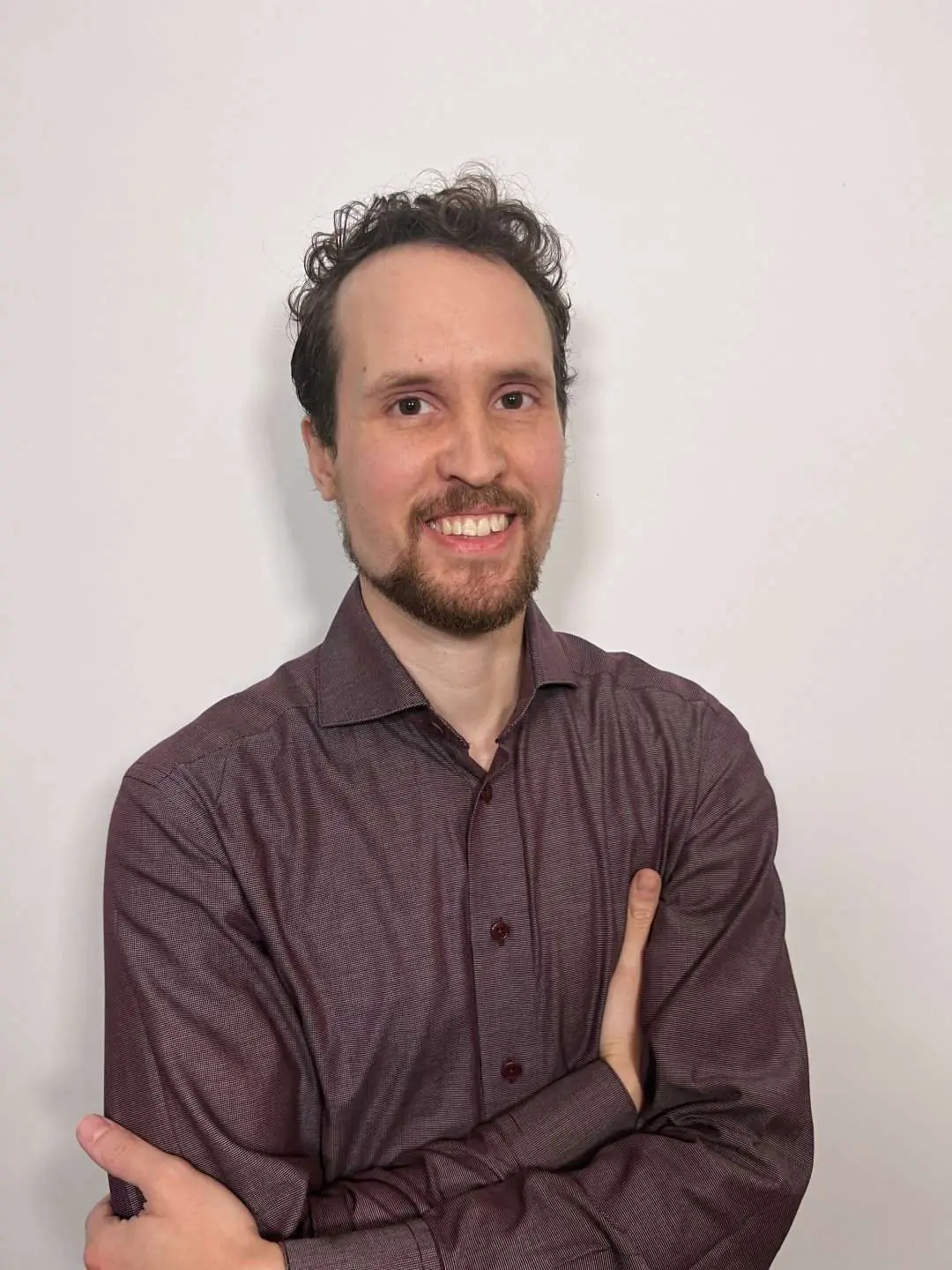
Co-founder and Head Trainer
Makes complex systemic thinking practical, teachable and usable in the room.
Meet Simon →
Trainer
Part of the very first training group, and has facilitated constellations since 2017.
Meet Anca →
Trainer
Came to constellations through her own healing, and now brings that lived understanding into her facilitating and teaching.
Meet Xilo →
Trainer
Practising since 2018, and works in four languages.
Meet Mina → Co-founder and Director
Has trained facilitators all over the world.
Meet Cecilia → Co-founder and Head Trainer
Makes complex systemic thinking practical, teachable and usable in the room.
Meet Simon → Trainer
Part of the very first training group, and has facilitated constellations since 2017.
Meet Anca → Trainer
Came to constellations through her own healing, and now brings that lived understanding into her facilitating and teaching.
Meet Xilo → Trainer
Practising since 2018, and works in four languages.
Meet Mina →Chapter 3
The practical side of joining: how groups form, how dates are decided, and the commitment involved.
Joining · what you can do now
The next group is already taking shape. See where it stands now, how the start date is decided, and what happens from registration through to joining.
Registration open
Registration is free and non-binding. Tell us which weekly times could work for you, and we use everyone’s availability to shape the next group.
Register for freeJoining · how it actually goes
This training gathers one group from across the globe, which lands us all in a problem you already know: how do busy calendars in different time zones find one weekly hour they share? The answer is the one you would reach for yourself: a poll. Registering casts your vote, every day and time that could work for you, and once enough people who fit have applied, their votes set the start week and the weekly slot. We do not start until then, and nobody pays anything before the group is real.
When we start
Now forming
last week of October 2026
The window the group now forming is aiming for.
first week of February 2027
The next window after it, if confirmation comes later.
Weeks rather than dates: the weekday comes from the confirmed group’s own availability, so it cannot be named before the group exists. The week can, so the week is what we promise.
How you join
Your step 1 of 3
Free, and it binds you to nothing. You leave your details and tick every weekly day and time that could work for you. Those ticks are real votes: the timetable is built from what the confirmed group can actually make.
Your step 2 of 3
You bring yourself: where you are, what you want the training for, and the questions nobody has answered yet. There is nothing to prepare.
Your step 3 of 3
The application asks for your group, your motivation and your payment details. The enrolment payment that follows is the first monthly payment of the tier you chose, never an extra charge on top of it.
Registering and the discovery call: either order, both before you can apply.
Fees
One ladder, three commitments: the monthly rate follows the length you commit to. A semester or a year buys that content in full, with the same group; the certificate itself comes with the full track.
One semester
One year
The full track
Whichever tier you choose, the enrolment payment is the first payment of it, never an additional charge on top.
Chapter 4
What students say, and where to go from here.
What students say
The well-structured and rich lectures provided a solid theoretical basis and built our knowledge step by step. The practical exercises helped with applying the theory right away, while also helped building our competency to facilitate little by little.
The team does an incredible job creating a safe container, funneling the information in an easy to digest way, and empowering trainees to take their constellation work into their individual fields with confidence.
Where to start
Any of the three can come first. The webinar shows you the teaching, the call settles fit, and registering casts your vote on the timetable. Before you can apply, the call and the registration both need to have happened.
The next step...
Notes
Two short notes on the path in, before the questions below.
What the craft actually requires, which backgrounds people train from, and what to look for in any training. From the head trainer of one of them.
Read more
A giant Doodle, filled in by strangers who end up in the same group. That’s how the weekly time gets found, and why the date comes last rather than first.
Read moreQuestions
Your cookie preferences
Essential cookies always on
These remember your cookie choice and protect our forms from spam. The site cannot work without them.