By the end of a family constellation workshop day you may have been three different people: yourself, with your own question; somebody’s grandmother, standing in a spot on the floor and reporting what it’s like there; and a quiet witness, watching a family you’ve never met rearrange itself in a room.
That’s the honest answer to “what will I actually do”, and I know it raises more questions than it settles. So let me take the day from the beginning.
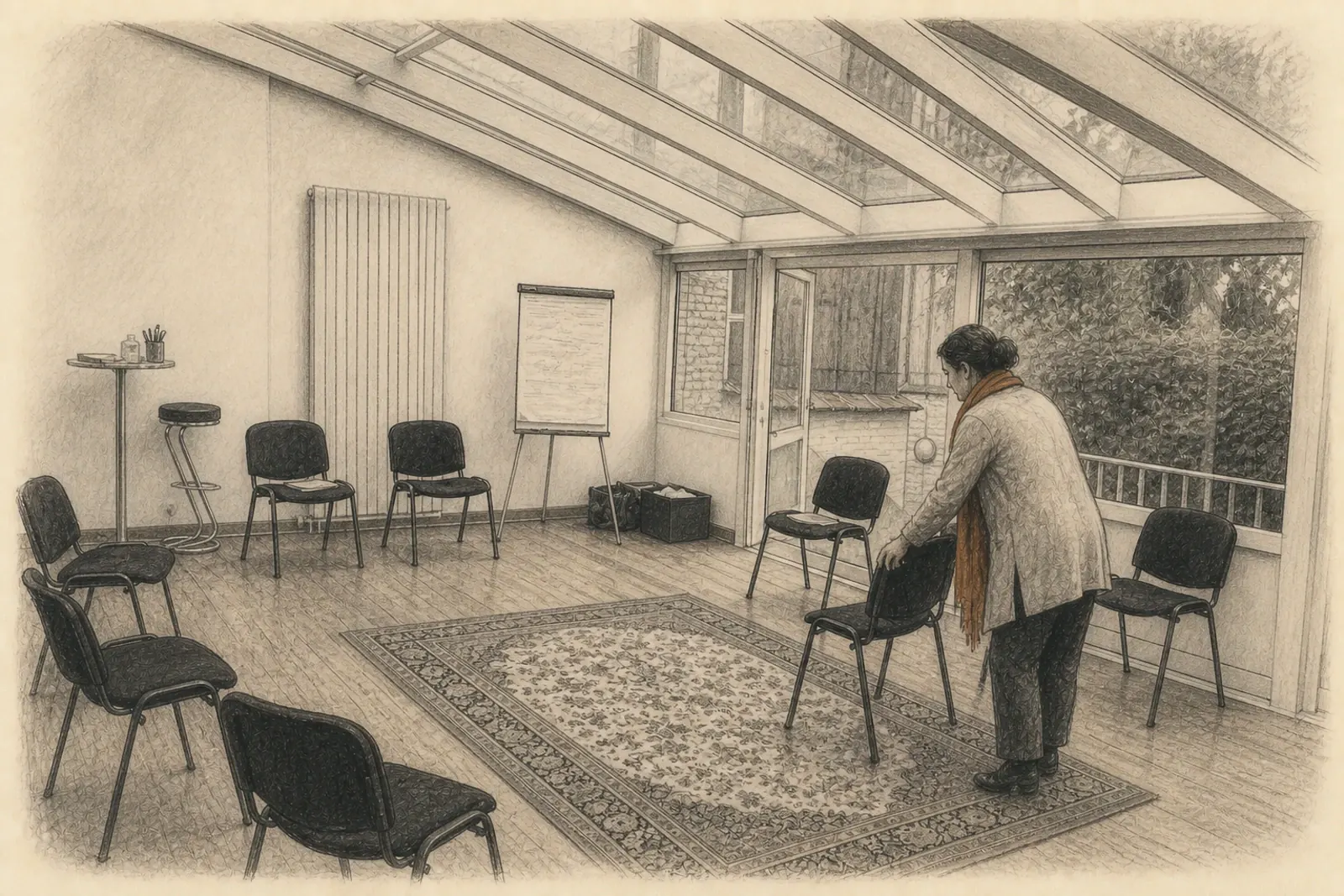
The room is built before anything happens in it
A workshop starts slowly on purpose. We open with a round, so every voice has been in the room once before any work begins. We agree the ground rules aloud, and the one I state most plainly is confidentiality: what’s shared in this room stays in this room. You may talk afterwards about what you experienced, never about who was there or what they brought.
Then there’s the unglamorous architecture: real breaks, food and something warm to drink, a pause of about ten minutes after every constellation. None of this is decoration. We read a place very quickly for cues of safety and uncertainty, and care is communicated through concrete things: being fed, not being rushed, knowing what comes next. By the time the first constellation begins, the room should already feel like a place where things can be put down.
Standing in for a stranger’s family
At some point, someone whose issue is being worked will look around the circle and ask: would you be willing to represent my father? You say yes or no. Both answers are respected, and no is a complete sentence here.
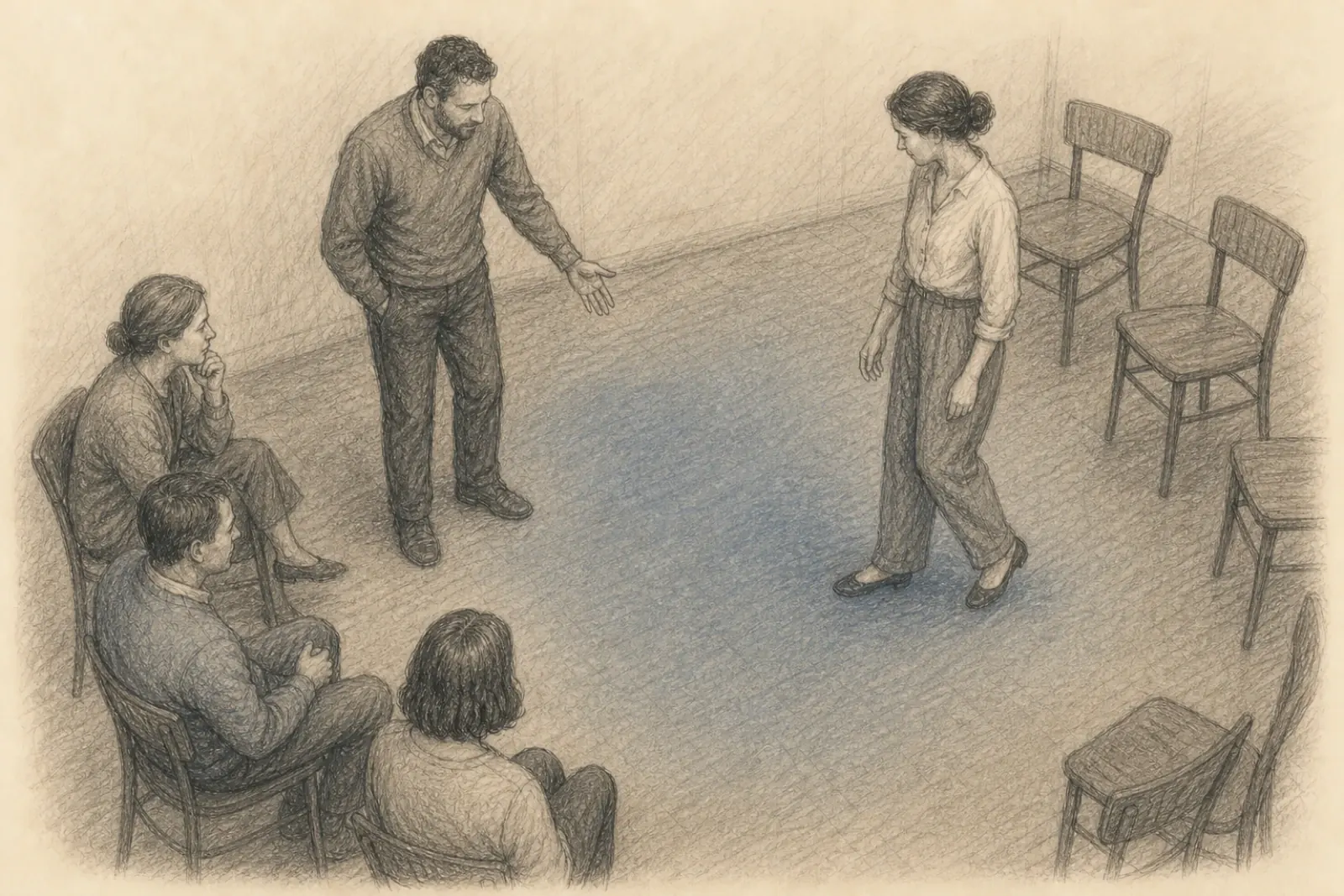
If you say yes, your job is almost embarrassingly simple. You take your place in the constellation, and you notice. How your body feels in that spot. Which way you want to face. Whether you want to move closer to someone or further away. When I ask, you report it, plainly and in the first person: “It feels heavy here.” “I can’t look at her.” “From here, I feel calmer.”
You don’t act, you don’t perform, and you don’t need to know anything about the person or their family. You’re not expected to explain what you feel, and neither am I. What we see, again and again, is that representatives report sensations, impulses and responses that feel strikingly relevant to the system being explored. We call this representative perception, and we hold it soberly: it’s an observation from the constellation, not proof of what is objectively true about someone’s family, and not a belief you’re asked to sign up to. You notice what happens, and you decide what it means.
Two protections sit under every role. You can step out of one at any moment, no explanation needed. And at the end, you’re released from it by name, marking clearly that the role is over and you are yourself again.
Bringing your own question
When it’s your turn, we talk first: what’s the issue, what would better look like. In a workshop this conversation is often shorter, and sometimes we’ll have done part of it privately beforehand, which protects both your privacy and the day’s rhythm.
Then representatives are chosen for the people in your situation, and you sit back and watch your own system from the outside, most likely for the first time in your life. People expect this to be exposing. It’s usually the opposite. The distance is the protection: the difficult thing is over there, held by others for a while, and you get to see its shape instead of being inside it. You’re witnessed, not examined. And the picture only ever shows how the system feels from where you stand. It’s not a verdict on your family, and nobody in the room will treat it as one.
You stay in charge of what you consent to throughout. You can pause or stop the process at any time. I remain responsible for the frame and for bringing the constellation to a contained ending. A constellation can rest at whatever image it has reached, and you may find that what you saw continues to settle or make sense in the days afterwards.
The quietest role is still a role
Some people come to a workshop without a burning question, to see a constellation before trying it, or to represent and witness. That’s a real way to attend, and often will bring more than first expected. A group’s attention is part of what holds each constellation, and you’ll be in the closing round like everyone else, because nobody leaves a day like this without their voice having been in the room at both ends.
If the day I’ve described appeals to you, the practical side, formats, places and what each one is like, lives on the workshops page. Come as any of the three people. The day has room for all of them.