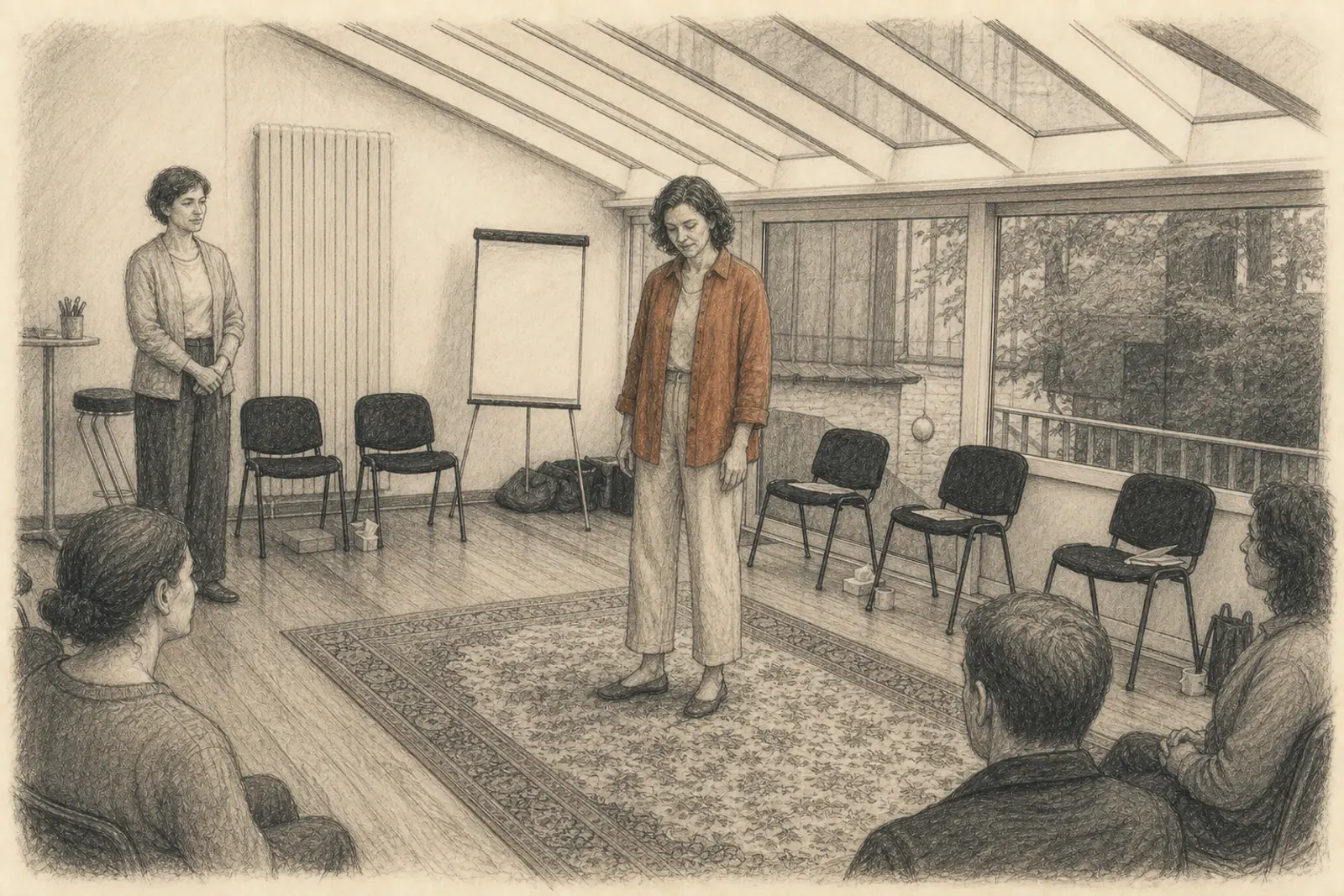
In the thousands of family constellations I’ve facilitated, taken part in and watched, I have never met a person who couldn’t represent. Not once. So if you’re about to do it for the first time and you’re worried about doing it wrong, I can offer you something solid: in this role, there’s no wrong to do.
Here’s what representing actually is, what you might notice, and the small pieces of craft that make it comfortable. None of it is required reading. People represent well with no preparation at all. But knowing the shape of a thing settles the nerves, and settled is a good way to arrive.
What you’re actually doing
At some point in a workshop, someone whose situation is being explored may ask you: “Would you be willing to represent my mother?” Or their father, their grandmother, sometimes something that isn’t a person at all: their anger, an illness, the family home. Gender doesn’t matter. You’re free to say no, and people do, particularly when a role lands too close to their own life. No is respected here, and it’s a complete answer.
If you say yes, you’ll step into the constellation. Sometimes the person whose constellation it is guides you to a spot with a hand on your shoulder. More often in our work now, you’ll be invited to find your own place: walk around a little, notice whether one spot feels different from another, whether you want to face someone or turn away. There’s usually a moment, and most people feel it, when you’ve arrived. We call it landing in the role.
And then your entire job is this: stand there and notice.
What you might notice, including nothing
Once you’re standing in the role, things may begin to arrive on their own. A heaviness or a lightness. An urge to step back, or to look at one person and not another. A feeling toward someone you’ve never met: tenderness, irritation, grief that doesn’t feel like yours. Sometimes a thought or an image. When I ask how it is where you’re standing, you say what’s there, plainly and in the first person: “It feels heavy here.” “I can’t look at him.” “From this spot, I feel calmer.”
And sometimes, nothing arrives. I want to be clear about this, because new representatives often treat it as failure: nothing is also an answer. The moment you step in, you belong to the picture as much as anyone in it. When there aren’t enough people in a group, we can fill roles with chairs or felts, and the constellation still has a shape. You standing there, feeling not much, is already information.
Two things not to do, and both are reliefs. Don’t perform. A constellation is no drama school, and nobody wants a portrayal of a stern father; they want to know what you actually notice from where you are. And don’t interpret. You might have a theory about what a feeling or impulse means. Keep the theory separate from the observation. What helps is what you notice, not the explanation you build around it.
One more thing, and it matters more than any other line in this post. You speak from what you feel, never from what you claim to know. “It feels as if I carry something very sad” helps. “Your grandmother wants you to know she forgives you” doesn’t, because representing isn’t channelling and no one in the room can check such a sentence. We know what we experience in the role, not what is objectively true about somebody else’s family. Said that way, what you bring stays honest, and it leaves the person whose family it is free to make their own meaning.
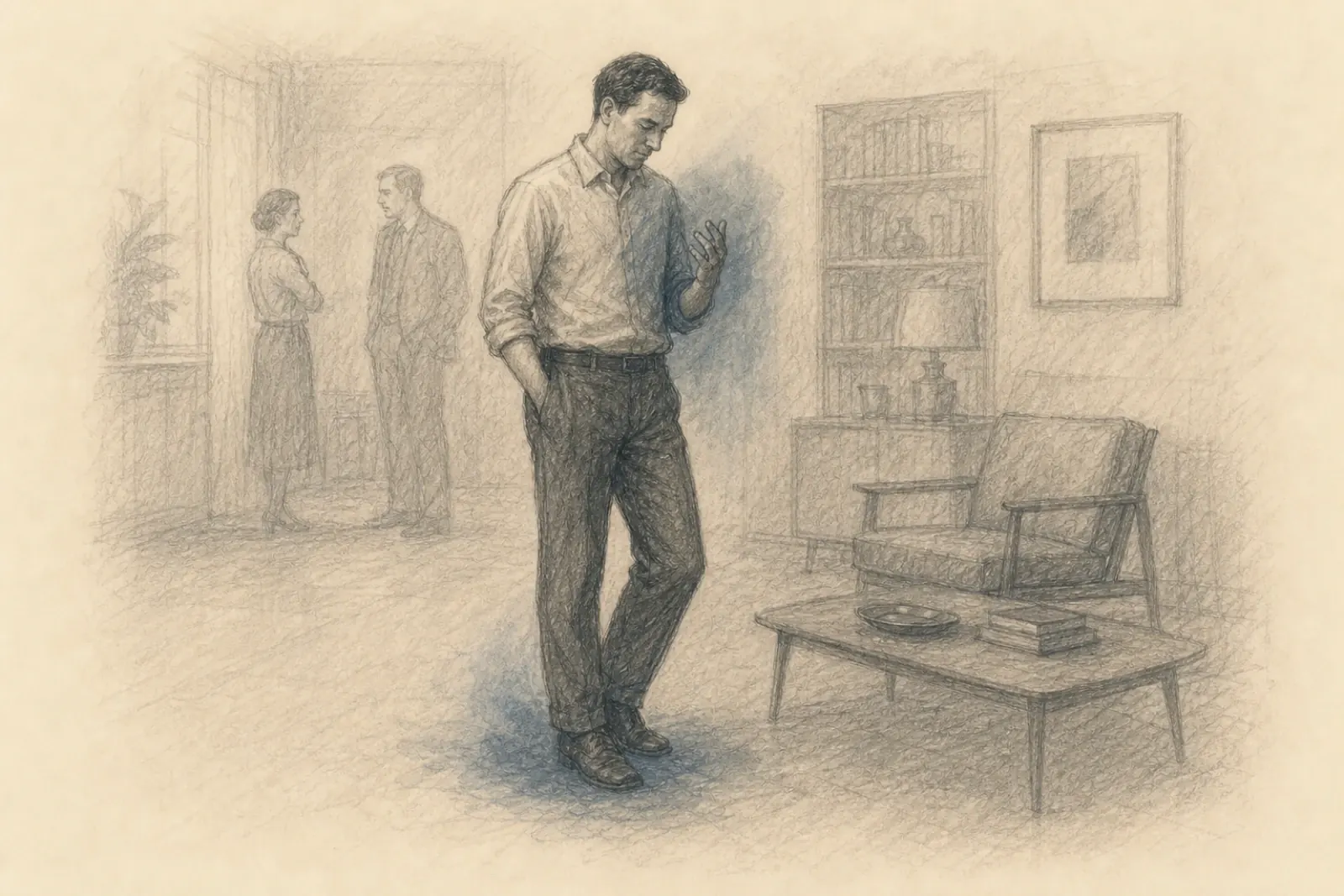
The small craft that keeps everyone comfortable
A few working habits, all of which I’ll say at the start of any workshop anyway:
Move slowly, so everyone can take your movement in. If a big impulse arrives, to cross the room, to push, to run, say it before you act on it: “I have the urge to walk away.” Often naming it is enough, and if the movement matters, we’ll make room for it in a contained way.
Personal space survives the role. Nobody touches, holds or hugs without asking first, and not wanting to be close prevents nothing. A bow, a sentence, a look or simply the right distance can carry what the constellation needs without physical contact.
If you want to say something while the constellation is moving, raise a hand rather than speaking over it. And if a role becomes too much, you don’t have to suffer through it. You can pause, step out entirely, or ask to be replaced. A constellation gains nothing from a representative having a hard time, and stepping out doesn’t spoil anything.
Coming back to yourself
When the constellation ends, the role ends too. We mark that explicitly rather than simply leaving you in it. You’ll be released from the role by name: “Thank you, Ana, for standing in for my mother.” The name is the point. It marks that what you carried for an hour goes back to being someone else’s.
Mostly that’s all it takes. Drink some water, stretch, step outside for a minute if you want to. Once in a while something from a role can stay with you for a little longer. If it does, say so. We can take a moment to help you come out of it properly before moving on.
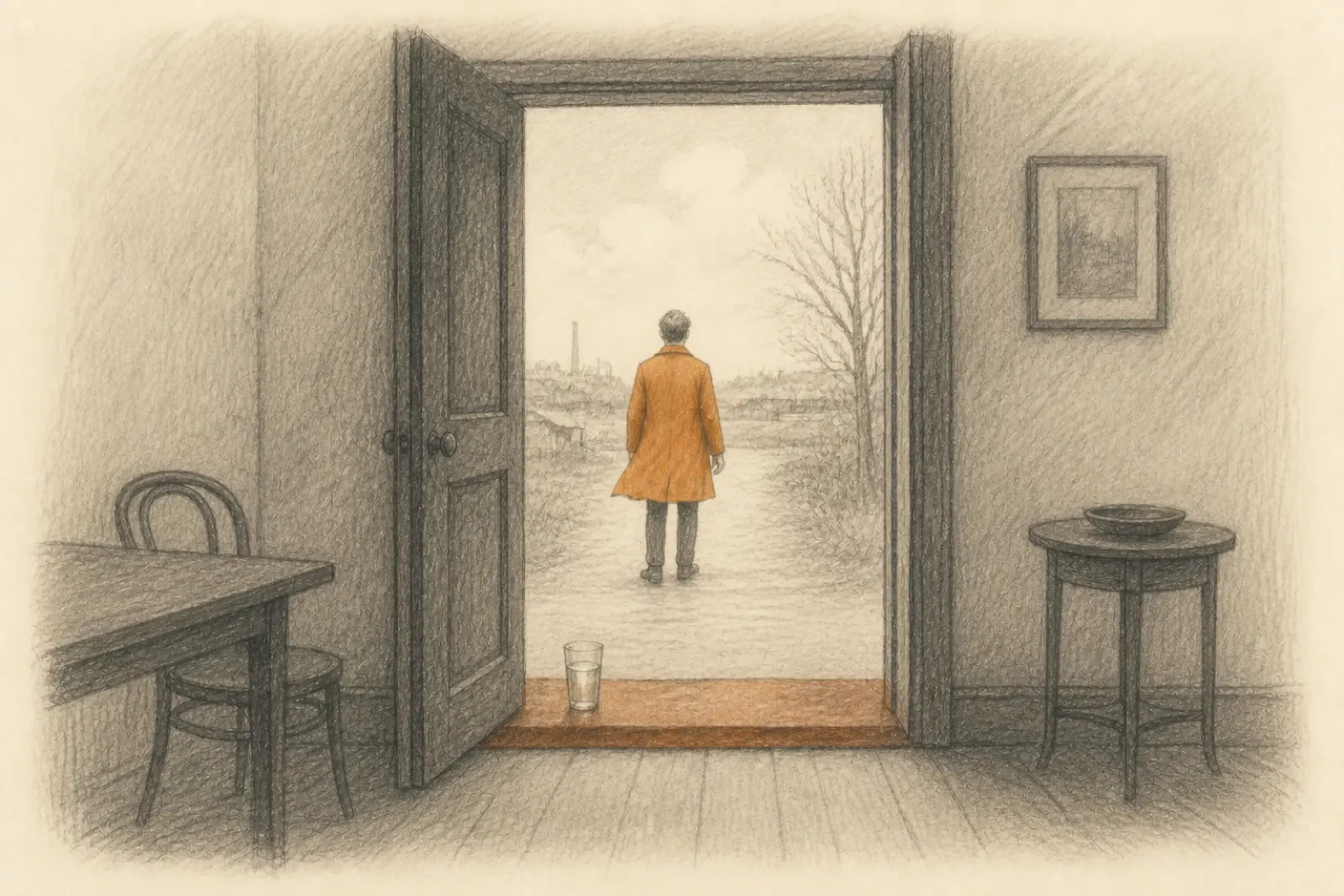
Why people step in a role
Because it isn’t only service. Representatives regularly come away with something of their own: an insight from standing in a perspective they’d never taken, sometimes a real shift, because you go through the constellation’s movement from inside it. People sometimes find that a role touches something unexpectedly close to their own life, even though the constellation belongs to somebody else.
The order of things matters: the constellation belongs to the person who brought their question, and now and then a role ends somewhere unresolved. What you get from representing is something a constellation may give you on the side, not something the constellation is organised around. But those side effects can be meaningful. Many people who now train as facilitators started as a stranger in someone else’s constellation, asked to stand in a spot and notice.
If you’d like to try it, a workshop is where representing happens, and coming along to represent, without a question of your own, is a fine way to attend.